
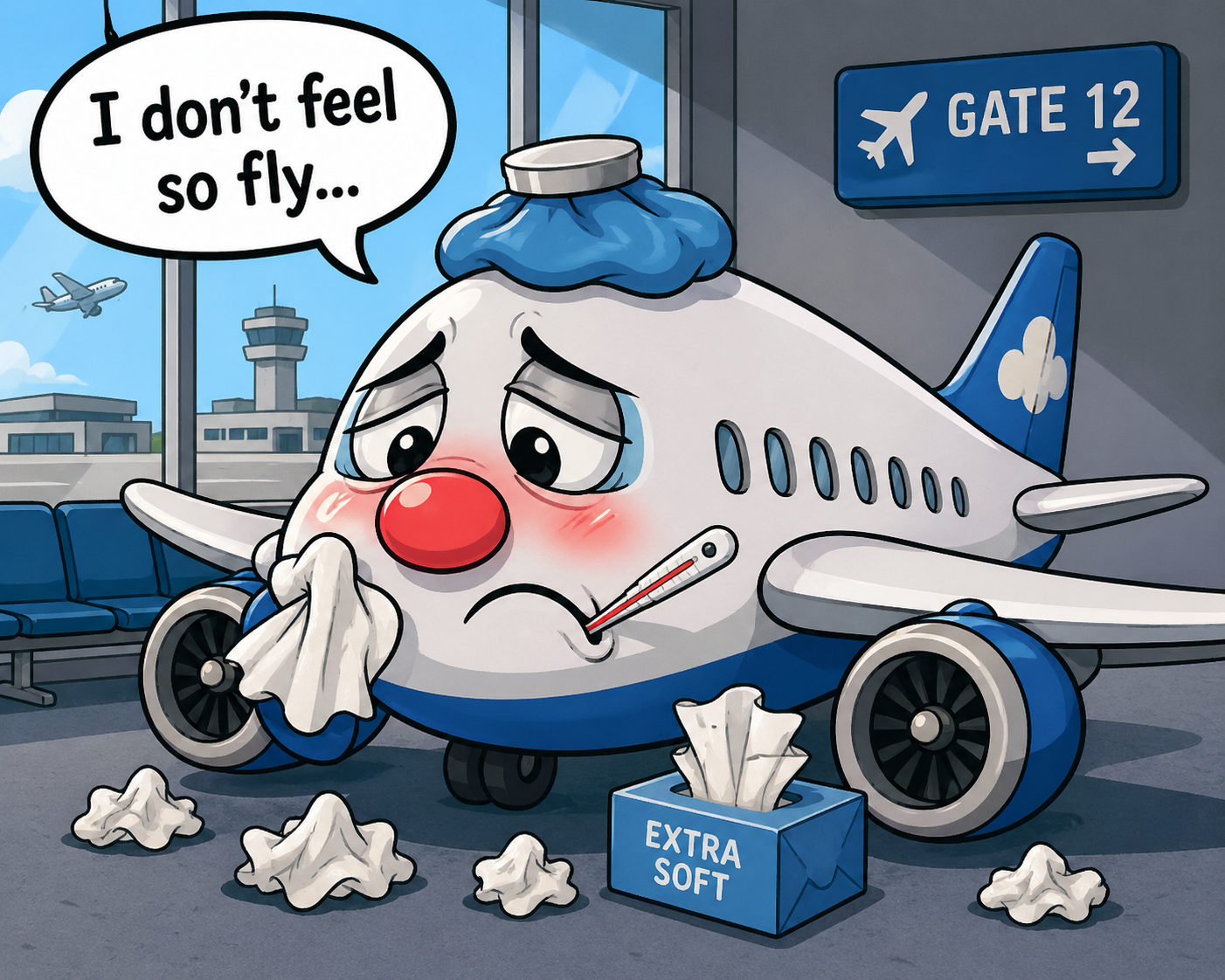
I recently attended a very interesting, research-based lecture about air travel and how to avoid getting sick on a plane. As a family physician, I thought the advice was simple, smart, and worth sharing—especially if you travel and don’t want to get sick.
Many people catch a cold after flying. That is not your imagination. Air travel (especially if you are traveling more than 5 time-zones) raise your risk of upper respiratory infections by 300%, especially because you are in close contact with many people for hours. Be aware that jet lag, poor sleep, and stress weaken your immune system. The good news is that a few small steps can make a big difference.
First, think about where you sit. On a plane, the people most likely to affect you are usually in the two rows in front of you and the two rows behind you. That means your “bubble” is bigger than you may think. A window seat is the best choice because you have less contact with people walking by in the aisle. Try to choose a seat near the front or back of the plane and stay in your seat as much as possible.
Second, wear a mask—and keep it on. This is one of the easiest and best ways to lower your chance of getting sick. Airports and planes are full of shared air and close spaces. A mask adds a strong layer of protection.
Third, clean what you touch. Plane surfaces can be dirtier than most people realize. Tray tables are one of the germiest spots on a plane (10 times more germs than on a toilet flush button). In one study, tray tables had more germs than seatbelt buckles, bathroom locks, and even the flush button in the airplane bathroom. Use a disinfecting wipe with at least 70% alcohol to wipe down your tray table, armrest, and seatbelt buckle. Then use hand sanitizer often, especially before eating.
Next, support your immune system before you even leave home. Get good sleep the night before your trip. Try to lower stress. Stay hydrated. Some travelers also use a layered approach with vitamin D, vitamin C, zinc, and probiotics to help support immune health.
Finally, be extra careful in busy travel areas like gate lines, boarding lanes, and airport bathrooms. These are high-contact spaces where germs spread easily.
Flying can be hard on the body. But with a few smart habits, you can lower your risk and arrive healthier.


You must be logged in to post a comment.