HPV vaccination is fighting cervical cancer and winning!

the vaccines

flickr.com/photos /lavid/ 01793987

HPV vaccination is fighting cervical cancer and winning!  HPV vaccination has been shown to decrease cervical intraepithelial neoplasia 1 (CIN1)  by 9%.  CIN1 is a precursor to frank, invasive cervical cancer.  So, this vaccine shows great success!

In fact, in the future cervical cancer screening guidelines may change to differentiate between those who have had the HPV vaccine and those who have not.  This may mean beginning to screen for pap smears at a later age or may have pap smears less often than those that do not have the HPV vaccine.

The HPV vaccine was  introduced in 2007. Initially it was a series of 3 vaccines.  Now, if given before the patient’s 15th birthday a 2-vaccine HPV series is given.  If started after the 15th birthday, then it is a three vaccine series given over 6 months.    Both boys and girls should get the HPV vaccine.

Boys’ benefits are decreased risk of head and neck cancers.  And, if the rate of HPV is less in boys, then it is also less in their female partners.  That helps with “herd immunity” where everyone is less at risk for an infection because some vaccinate.  It takes a village, right?!
Posted in infections, Pediatrics, Sexually Transmitted Infections, Uncategorized, Vaccines | Tagged , , , , , , | Comments Off on HPV vaccination is fighting cervical cancer and winning!

IUD insertions are on the rise. Thank President Trump for this…

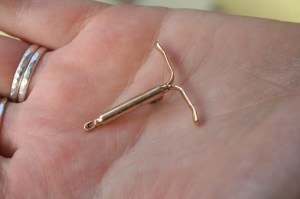
Here’s an interesting article about the response to the uncertainty of women’s contraception coverage under President Trump.  I can attest to the increase in long-acting reversible contraception (like IUDs and Nexplanons) insertions since the election.

Interested?  Read on…

http://www.mdedge.com/familypracticenews//article/133580/contraception/increased-iud-use-suggests-trump-effect

Posted in Uncategorized | Comments Off on IUD insertions are on the rise. Thank President Trump for this…

Are you a woman with fibroids?


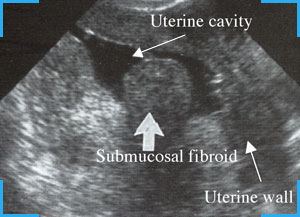
sonohysterogram

Are you a woman with fibroids?  What are they?  Why do you have them?  What can you do about them?

Fibroids are a common benign neoplasm.  They are more common in older women and African American women.  In fact, one study shows that 80% of 50 year-old women have a fibroid.  Most are discovered incidentally.  We affectionally call these findings “incidentalomas” meaning they may be insignificant, but now we know you have them.

What are fibroid symptoms?  You may feel abdominal/pelvic pressure, constipation, increased urinary frequency and urgency (because the fibroid presses on the bladder), urinary retention, abnormal uterine bleeding, and pain with intercourse.

What is the best way to diagnose them?  Ultrasound.

What to do about them?

  • Watchful waiting may be best.   If the patient is mostly asymptomatic, then waiting it out may be all that is needed.  That is because that most fibroids shrink  in size during menopause.
  • If you have symptoms of heavy menstrual bleeding, then hormonal contraceptives, tranexamic acid or NSAIDS like ibuprofen may help decrease menstrual blood flow.  Surgical treatment is done at times which may lead to
  1. hysterectomy (taking out the uterus) or
  2. myomectomy (cutting into the uterine muscle to cut out the fibroid),
  3. uterine artery embolization (an interventional radiologist or vascular surgeon puts a catheter in to your groin and blocks the artery that feeds the fibroid),or
  4. MRI-guided focused ultrasound surgery.
Posted in menstrual issues, Uncategorized, Women's Health | Tagged , , , , , , , | Comments Off on Are you a woman with fibroids?

RSV bronchiolitis. Diagnosis and treatment

RSV bronchiolitis.  I’ve seen lots of bronchiolitis in the hospital recently.

babyDiagnosis and treatment.  Does your infant or young child have a hacking cough?  It may be respiratory syncytial virus or RSV.

Most patients present with two to four days of upper respiratory tract symptoms (like fever, runny nose and head congestion).  Then the symptoms go lower like with a hacking cough, wheezing, and increased work of breathing.

How does your kid get this?  RSV is transmitted through contact with respiratory droplets either from an infected person or they infected themselves by touching contaminated secretions on a surface and then touching their mouth/nose/eyes.

As difficult as this is with all of our fancy equipment, the treatment is supportive.  What does supportive mean? It means we give the patient oxygen if they are hypoxic (have low oxygen) and we give intravenous fluids if the patient is dehydrated.  Our “fancy” stuff like epinephrine, steroids, hypertonic saline, bronchodilators, and antibiotics are often NOT helpful.

Is there a way to avoid this infection?  Yes.   There is a prophylactic medication that is given to 3 types of patients: 1.  infants who were born premature (BEFORE 29 weeks gestation) or 2. infants with chronic lung disease or 3. premature infants and children with significant heart disease.  This medication is called  palivizumad which is a humanized monoclonal antibody, given in up to five monthly doses.

Posted in Pediatrics, Uncategorized | Tagged , , , , , , , | Comments Off on RSV bronchiolitis. Diagnosis and treatment

Brag post: DrLeslieGreenberg.com is one of the top 100 healthcare blogs of 2016 !


IMG_3426Brag post: DrLeslieGreenberg.com is one of the top 100 healthcare blogs of 2016 !

Wow!  How did I miss this?

I have truly enjoyed being a physician and an educator.  My goal is to both educate myself and my patients.  I find that reviewing headlines, articles and research is rewarding.  I distill it down to a readable (?!) blog which also helps me incorporate those concepts into my medical practice.  I hope it also helps you take care of yourselves.

Thanks for the kudos.  I appreciate it.

Want to see other 99 blogs?

blog.evisit.com/top-100-healthcare-blogs-2016-edition

Posted in Uncategorized | Comments Off on Brag post: DrLeslieGreenberg.com is one of the top 100 healthcare blogs of 2016 !

What can the elderly do to decrease their number of falls?

What can the elderly do to decrease their number of falls?

Lots of things!  Lifestyle modifications are best: structured exercise programs and home safety interventions (like get rid of throw rugs and electrical cords across walkways).  Multifactorial assessment and inv=tervention programs reduce the rate of falls, but not the risk of falling.

What has NOT been found to work?  Vitamin D supplementation AND education about fall prevention has not been shown to decrease the rate or risk of falls.

Why is this so important?  1/3 of people older than 65 years old fall each year.  Falling once doubles a person’s chance of falling again.  One out of every five falls causes a serious injury like a head injury or a broken bone.  If an elderly person falls and requires hospitalization, their average bill is usually over $17,000.  Wow!

So, exercise and keeping the home free and clear of clutter underfoot are key!

I hope this helps.

elderly people walking

flickr.com/ photos/ tokaris/ 207335658

Posted in end-of-life issues, General Medicine- Adults, Uncategorized | Tagged , , , , , , | Comments Off on What can the elderly do to decrease their number of falls?

Should you take a statin to decrease chance of dementia?

Should you take a statin to decrease chance of dementia?  No.  What?  We medical-sorts link “educated” logic together.  And, many times this is wrong.

It would seem intuitive that vascular dementia (when the brain doesn’t get enough blood) can be exacerbated by atherosclerosis (hardening of the arteries with cholesterol).

But, research has shown that statins given later in life do not prevent dementia or cognitive decline.  This was in a randomized controlled trial with over 26,000 patients.  they followed these patient’s cognitive assessments and there were NO differences in the number of patients who developed dementia or cognitive decline between those taking statins and those not.


sunshine

flickr.com/photos/ bain/ 731005089

Posted in Cholesterol, Uncategorized | Comments Off on Should you take a statin to decrease chance of dementia?

Should you introduce peanuts early to children?! And how?!

.flickr.com/photos/cheesy42/26355491291peanutShould you introduce peanuts early to children?  And, how?!

Yes.

For historical sake, when I was in medical school, the rule was to AVOID peanut ingestion until age one.  The thought was that early introduction would increase the risk of peanut allergy.  It is said that 50% of the material that medical students learn is false and now we know that this rule is part of that 50%.

The National Institute of Allergy and Infectious Disease released their guidelines after an expert panel convened.

The NEW rules are

  • For infants with severe eczema, egg allergies, or both, peanut-containing foods should be introduced at 4-6 months of age.
    • Your physician can order a peanut-specific IgE (peanut sIgE) blood test before introducing peanut to help determine the potential sensitivity and need for initial “supervised feeding” (at a medical office)  versus feeding at home.
  • For infants with mild to moderate eczema, the recommendation is to introduce peanut-containing foods at 6 months of age after the introduction of other solid foods.
  • For infants with no eczema or food allergies, the parents can introduce peanut containing foods at any age after 4 months.
  • The total amount of peanut protein should be 6 to 7 grams divided into three or more feedings per week.  You can thin peanut butter by adding hot water to 2 teaspoons of peanut butter to make a warm puree.  Put a little of this puree on the tip of a spoon and feed it to your child.  Then hit and watch for 10 minutes, checking the baby or any reaction like hives, rash, behavior changes or trouble breathing.  If no reaction, you can continue to feed the puree slowly.  Continue to watch the child for about two hours to make sure that there is not a late reaction.
  • Do not give peanuts as those can be a choking hazard.
  • Once peanut introduced, the parents should continue to provide peanut on a regular basis for several years.

The findings of another study were that there is an 80% relative reduction in peanut allergy at 5 years of age for peanut-exposed children compared with no exposure.


Enjoy!


Posted in Uncategorized | Comments Off on Should you introduce peanuts early to children?! And how?!

Yes, I’m a physician and a mother

My three children are now teenagers.  I chose to wait for motherhood until after my (and my husband’s) medical training finished…so I got a late start.  Oh well…
I appreciate this article’s perspective.  http://www.kevinmd.com/blog/2017/01/stop-surprised-im-physician-mother.html

Posted in Uncategorized | Comments Off on Yes, I’m a physician and a mother

Women physicians may extend your life span more than male physicians

elderly people walking

flickr.com/ photos/ tokaris/ 207335658

A recent article in JAMA shows the benefits of being cared for by a woman physician.  Nearly 1/3 of practicing physicians are women and 1/2 of medical students (future physicians) are female.  That’s good news.

Want to read more?

You might live longer if your doctor’s a woman

Posted in Uncategorized | Comments Off on Women physicians may extend your life span more than male physicians