
What do some doctors do on their day off?…teach 6th graders about the heart!
 Man, do I LOVE my profession.
What do some doctors do on their day off?…teach 6th graders about the heart!
Man, do I LOVE my profession.

flickr.com/photos/ jaypoct/ 2429061604/
Diclofenac gel (the only topical nonsteroidal anti-inflammatory available in the United States) was shown to help decrease pain and improve function scores for as long as 12 weeks in patient with osteoarthritis of the knee. The drawbacks are the cost of the diclofenac gel (reportedly $260- 330 per 150 mL bottle), minor skin dryness and irritation.
 Dear patients,
After caring for (and doctoring) Wichitans for nearly 20 years, my family is moving to our hometown–Reno, Nevada.
I will be practicing at Andover Family Medicine until July 21, 2015.
Please call my office to schedule a visit before then so… we can do a check-up, review your medical care, and can seamlessly coordinate your care.
In Reno I will work as family physician/teacher at my alma mater medical school.
It’s been an honor caring for you and your families. My move away is bittersweet as I will truly miss being your family physician. I hope you can understand my need to be near family. I will greatly miss taking care of you.
Wishing you the best,
Leslie Greenberg MD
 Do we need a study to evaluate this? Apparently so. And, yes! Overweight children are 18% more likely to have lower extremity injuries compared to normal weight children. The risk increases to 24% in obese children and 34% more likely in extremely obese children. Good news is that obese children are not at increased risk of upper extremity injuries.
The recommendations should be to discourage obesity in children. Good diets. Healthy snacks. Exercise daily.
Hope this helps.
 I have been recognized by the American Academy of Family Physicians for my years of community activism and scholarly activity. Thanks, AAFP!
Signed,
Leslie Greenberg MD FAAFP (Woo hoo!)

flickr.com/ photos /sicilianitaliano/3281602519
Disability evaluations are more than completing a form… I would first ask if there is an alternate job/function/work schedule that you can change to that may fit your needs.
Did you know that according to the World Health Organization, more than 1 billion people worldwide have a disability? In the United States more than 56 million American workers have some form of disability. Of these, more than 38 million have a severe disability. The conditions that most often lead to disability include back or spine problems, heart conditions and arthritis.
Disability impacts family members and caregivers. There are differentiations between disability, impairment and handicap. These need to be delineated to best evaluate patients and make appropriate recommendations. The two largest disability programs in the United States are Social Security Disability and workers’ compensation. For veterans, the U.S. Department of Veterans Affairs provides disability benefits.
There are many family physicians performing this initial evaluation of disability. I do not perform disability evaluations; I rely on subspecialists and occupational health physicians. If you are interested in disability, look for physicians who have received specialized medical education by American College of Occupational and Environmental Medicine, the American Academy of Disability Evaluating Physicians, or the American Board of Independent Medical Examiners.
My hope is that even with deficits each of our lives is a meaningful and productive one.
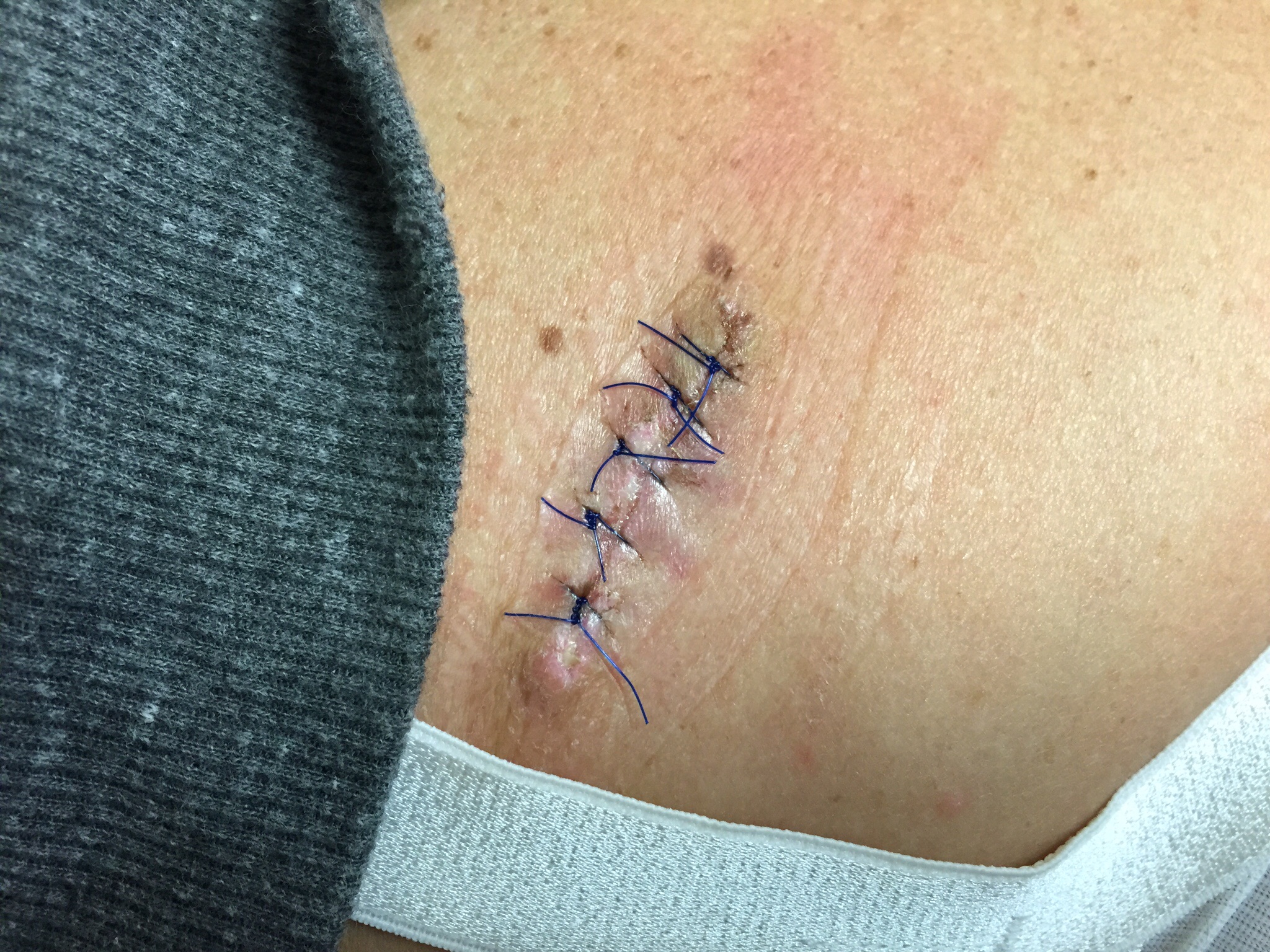
Can stitches get wet?

flickr.com/photos /ouistitis/ 6052645034
Yes. Stitches can get wet anytime. We often suggest that stitches stay dry for the first 24 hours, but studies have shown that there’s no increased risk of infection or wound breaking down if it gets wet in the first 24 hours.
When should you take prophylactic (a medicine used to prevent infection) antibiotics?
Prophylactic antibiotics have little benefit in healthy patients with clean wounds. Topical antibiotic ointments may decrease infection in minor contaminated wounds. Prophylactic antibiotics are often started after human bite wounds, or deep puncture wounds.
Do I need a tetanus vaccine?
Maybe. If you have never received a tetanus vaccine, a tetanus toxoid vaccine should be given as soon as possible. If you have not completed a primary series of tetanus immunizations (at least 3 vaccines) if your last tetanus booster was 10 or more years ago, then a booster is warranted.
How are wound infections diagnosed and treated?
If you have any of the following symptoms, your wound may be infected—
When does a wound require hospitalization of referral to a wound care specialist?
Most wounds can be managed by your family physician in the office. However, there are several reasons for hospitalization or referral. Severe wound infections. If wound may need surgical exploration, incision and drainage, imaging or plastic surgery.
 What is the best solution to use to clean a wound?
Antiseptics are commonly used to irrigation contaminated wounds. However, tap water (from the faucet) and sterile saline worked equally well to irrigate (clean out) uncomplicated skin wounds. Warm water may feel better.
Should wounds be covered?
Yes. Keep wounds covered with an appropriate dressing and reassess periodically (..twice a day is good). The dressings help to protect the wound by acting as a barrier to infection and for absorbing wound fluid.
Should a wound be kept wet or dry?
A moist wound bed stimulates epithelial cells to migrate across the wound bed and resurface the wound. (In contrast, a dry environment may lead to cell desiccation and scab formation, which may delay wound healing.) Topical antibiotic ointment can help keep the wound wet.
When can a wound no longer be sutured?
Guidelines recommend that wounds that are clean (and without evidence of infection) should be sutured within six to 12 hours of the injury. Suturing can be delayed for up to 18 hours. If the wound is located at an area of lots of blood vessels (like the head or face) these can be closed up to 24 hours from the time of injury. Bite wounds are usually left open (not sutured), due to infection risk.
For minor lacerations, are tissue adhesive (glue) as effective as suturing?
Yes. If the wound has low-tension on it and is linear, glue may be considered. Tissue adhesive is not recommended for complex, jagged edges or high-tension areas (like joints or hands).
 27th Annual Free Skin Cancer Screening Clinic
Where: KU School of Medicine- Wichita at 1010 N. Kansas. East Entrance
When: Saturday, May 2, 2015 8 am to noon
For more information: 316 777 6104
“Physicians will provide brief examinations of the skin, at no charge to the general public.
No treatments will be given, only recommendations as far as what spots or moles are suspicious and should be evaluated further or treated.
Free educational material, in the form of pamphlets concerning sun protection and skin cancer detection and prevention, will be provided.”

flickr.com/photos/ sharynmorrow/ 205306168
First off, you need to know YOUR blood pressure. Get this done at any pharmacy or grocery store. There are two blood pressure numbers. Your blood pressure should be UNDER 135/ UNDER 85 (s Why is this so important? Hypertension is the MOST common chronic condition treated by family physicians.
What is the risk of high blood pressure? Elevated blood pressure is associated with increased risk of heart failure, stroke, heart attacks, and death. (Did you know that treating high blood pressure decreases these risks?!)
Lifestyle modifications are considered first. Adopt the DASH diet (Dietary Approaches to Stop Hypertension diet), restrict sodium intake, regular exercise, and moderate weight loss.
What are blood pressure goals? The diastolic number (bottom number of blood pressure reading) should be less than 90. And top number should be less than 150 mm Hg.
What is the DASH diet?
Consume a diet that emphasizes vegetables, fruits, whole grains. Limit sweets, sugar-sweetened beverages, and red meat.
How much sodium? Consume no more than 2,400 mg of sodium per day. If you reduce sodium to 1500 mg per day or less this may be help blood pressure reduce even further.
How much regular exercise? Three or four 40-minute sessions of moderate to vigorous activity per week is suggested.
Best way to follow your blood pressure is to take your blood pressure twice a week and write it down. The cuffs available at the pharmacy and grocery stores work well. Bring these readings into your physician at your next appointment. This will gauge whether you may benefit from medication.
 Dr. Leslie Greenberg's Blog
You must be logged in to post a comment.