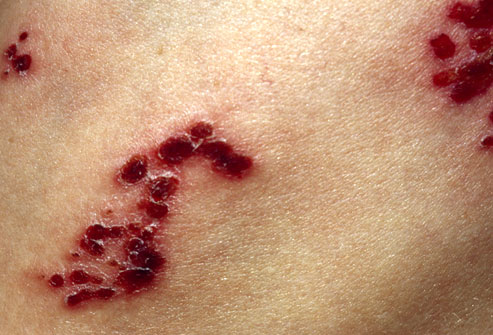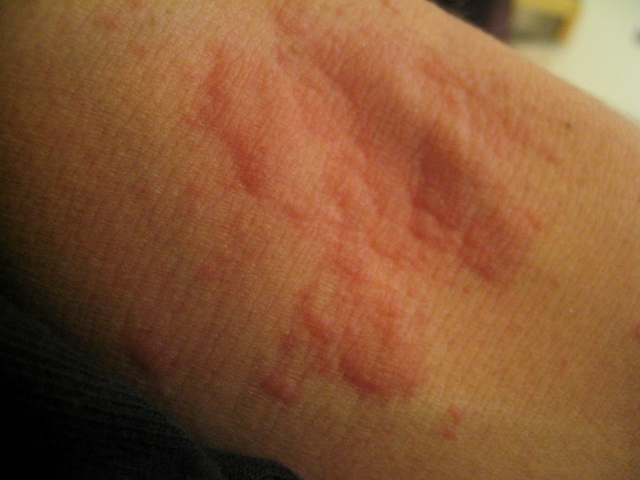
Hives. What causes them? How to make them go away?

flickr.com/photos/ espelina/ 24831708

I love to see hives.  So treatable.  So temporary.  And, to avoid them in the future is . . . so rewarding.

What are hives?

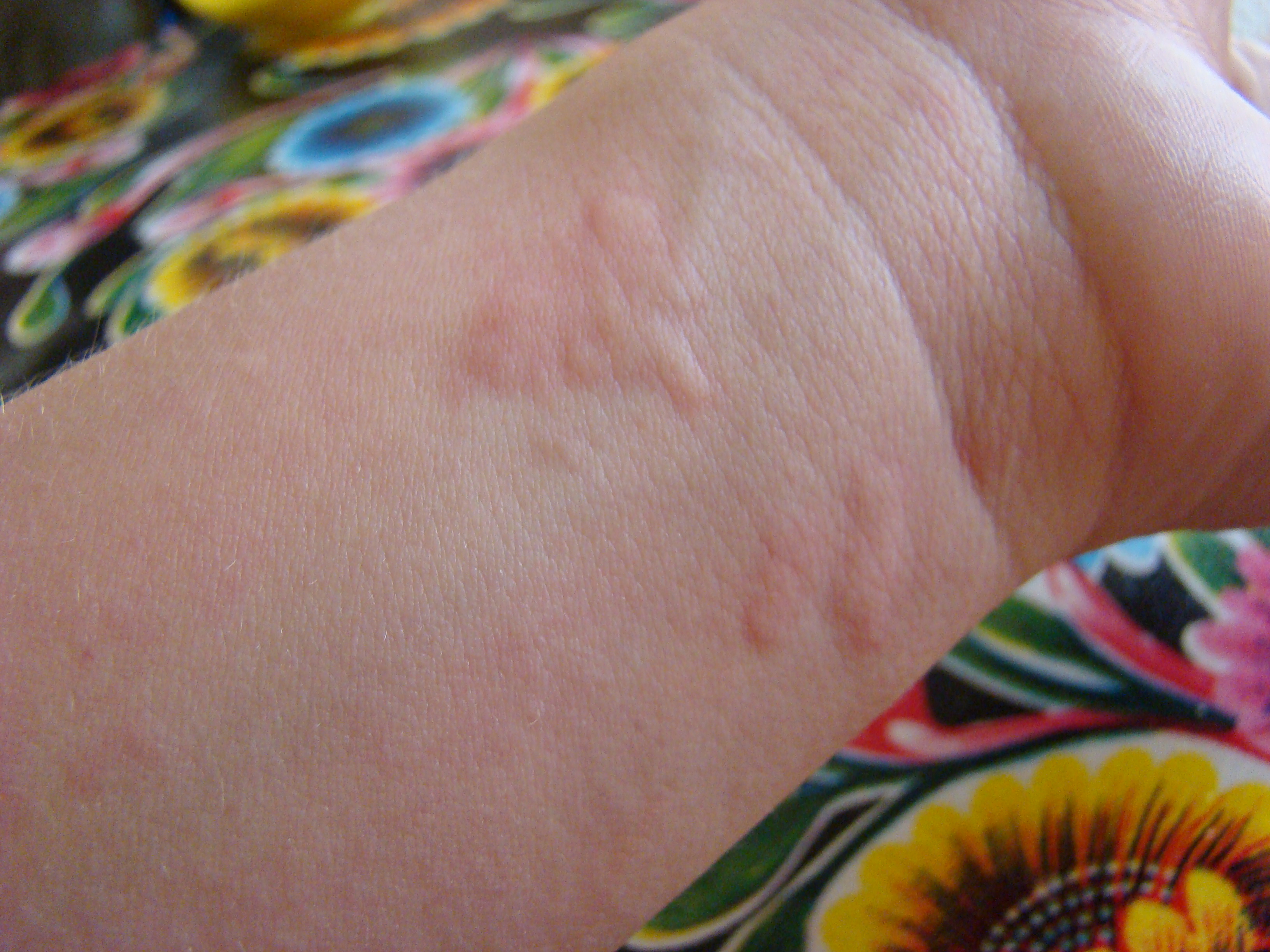
  • Raised bumps in the upper layers of the skin.
  • Red or pink or pale (almost skin colored).
  • Itchy.

Sometimes hives are part of a larger allergic reaction which can involve the airway.  I have taught my kids (and my patients) “You need to breathe to live.”  So, if you have a serious allergic reaction with symptoms like dizziness, swelling, or difficulty breathing call 911 or go to the emergency room.

Hives usually come and go.   Take pictures.  Between the time you make the appointment and you are seen, the lesions most likely have changed.  This history is important.

Anyone can get hives.  20% of us will have hives during our lifetime, but only 1% will have hives lasting more than 6 weeks.

What causes hives?

  • Infections.
  • Allergies to food or particles in the air that touches the skin.
  • Insect stings or bites.
  • Exercise (Personally, I get this every time I run in cold weather–a.k.a. Kansas winters).
  • Medicines.

To diagnose hives see your doctor.  Blood work may be needed.

The most important treatment is avoiding the cause of the hives.  Antihistamines, of which there are two families of this medication, may also help.   At times, a prescription is needed to stop the hives.flickr.com/photos/ manueb/ 3682755320
Want more information?  http://familydoctor.org/737.xml

Posted in allergies, allergies, Dermatology, Dermatology, General Medicine- Adults, Pediatrics, Uncategorized | Tagged , , , , , , , , , , , , , | Comments Off on Hives. What causes them? How to make them go away?

Do YOU need hepatitis B vaccine?

flickr.com/photos/ 51868421@N04/ 5277695536

New indication for an old vaccine. The Centers for Disease Control’s Advisory committee on Immunization Practices (the organization that tells us doctors when, why, and which vaccines) is now recommending hepatitis B vaccine series to unvaccinated adults less than 60 years old with diabetes.

In a study with 91,000 adults it was found that those with diabetes have a nearly two-fold increased risk of hepatitis B infection. Inadequately cleaned blood glucose monitors were identified as the most likely source of infection spread: glucose-monitor sharing in households, work site health clinics, schools, and diabetes camps.

Take home points:

  • Know there are risks in sharing glucose meters even if the glucose strips and lancets are new.
  • Call your insurance company to be aware if they will cover (the 3 hepatitis B vaccines) the cost.

Others who need hepatitis B vaccine are

  • sexually active with multiple sex partners
  • homosexual and bisexual males
  • household contacts of those with hepatitis B
  • IV drug users
  • healthcare workers
  • patients on chronic hemodialysis or receiving blood products (like with hemophilia)
  • chronic liver disease
  • all unvaccinated persons in areas of “intermediate to high levels” of endemic hepatitis B infection

Hope this helps.

Posted in Diabetes, General Medicine- Adults, Uncategorized, Vaccines | Tagged , , , , , , , , , , , , | Comments Off on Do YOU need hepatitis B vaccine?

IUDs

flickr.com/photos/ stickypearls/ 4253230816

I was asked by a patient recently to discuss IUDs.  There are two kinds of intrauterine devices on the market.  One is hormonal, one is not.

The hormonal IUD, a progesterone-secreting device, is called the Mirena.  It works for 5 years.  One of the most common/bothersome side effects is irregular menstrual bleeding.  The Mirena will also decrease the amount of blood loss and may cause stopping of menstrual periods altogether.

The other type of IUD is called the Copper-T.  It contains no female hormones and works well for ten years.  The most common/bothersome side effect is increased vaginal bleeding and abdominal pain.  This is not a suggested method if you already bleed briskly during menstrual periods as the amount of blood may increase.

The IUD can be placed inside the uterus during a routine office visit.  Just like for a pap, a woman is on her back, feet in stirrups, and speculum inside the vagina.  Insertion of the IUD takes about 15 minutes.  Mild abdominal pain/cramping may occur afterwards, but this subsides within a few hours.

The cost of the IUD is mostly the cost of the device.  The total fee of the device and insertion may be $800 (which if spread over 5 or 10 years is pretty cost-effective compared to other forms of contraception).  Some insurances will cover it.  I encourage you to call your insurance to inquire about your portion of the bill.

The IUD does not fight against STDs, but is a very effective form of contraception.

Hope this helps.

Posted in contraception, Uncategorized, Women's Health | Tagged , , , , , , , , , , , , | Comments Off on IUDs

Will my knee pain get worse?

flickr.com/photos/ markcraig/ 2468186411

There are identifiable risk factors which may predict who has worsening knee arthritis.  If you are

  • male,
  • obese,
  • feel worse pain in your knee (your opinion), or
  • have worse looking knee xrays (my opinion)

your knee pain is more likely to get worse.

If you have many joints that hurt, misalignment of the knee or are sedentary you are less at risk for worsening knee pain than those with the risk factors above.

So, your doctor may

  1.  take an xray to assess how the bones and joint look
  2. suggest exercise to help mobilize the knee and
  3. suggest weight loss (as those with body mass index over 30 have 1 ½ times the likelihood of worsening knee pain versus those at a healthy weight, meaning BMI less than 25).

Take home points:  Lose weight and stay mobile!

Posted in bone health, General Medicine- Adults, Uncategorized | Tagged , , , , , , , , , , | Comments Off on Will my knee pain get worse?

Does aspirin help avoid colon cancer?

flickr.com/photos/ mag3737 /511834317

Yes.  An article published in Lancet 2010 revealed aspirin (75 mg or more) a day decreases your risk of some types of colon cancer.  This article combined results of four studies totaling 14,000+ patients.  The caveats are that

  • aspirin must be taken daily for more than 5 years.
  • aspirin decreased proximal (or right-sided) colon cancer by 70%.
  • aspirin significantly decreases the risk of rectal cancer.
  • doses of aspirin greater than 75 mg a day were not shown to decrease colon cancer more than 75 mg a day.

Hope this helps.

Posted in Cancer, colon, General Medicine- Adults, Uncategorized | Tagged , , , , , , , , , , | Comments Off on Does aspirin help avoid colon cancer?

Sometimes TWO is better than one!

flickr.com/photos/ darabidduckie/ 3114729520

Are you going WITH a family member to the doctor?  Your attending an office visit with the doctor can be helpful in many ways.

  • Giving details about the patient’s concerns/issues, if needed.
  • Translating, if there is a language barrier.
  • Helping the patient understand the diagnosis and treatment plan
  • Assisting the patient in making treatment decisions to fit lifestyle/home needs
  • Remembering WHAT was said.  This is especially true if there is a difficult diagnosis, like cancer, when frequently the patient cannot remember anything said after the diagnosis.

If you as the patient want to bring someone to a doctor’s visit consider parents, children, siblings, spouse/partner, caregivers, neighbors, or friends.

Other hints for the visitor (not the patient):

  • Please do not bring up your own medical complaints.  Your focus of the visit should be on the patient, too.
  • Step out of the room so that the patient can address any personal or confidential issues with the physician.
  • If you are the caregiver and are overwhelmed, let the physician know.  More assistance or respite care can be arranged.

Hope this helps.

Posted in Uncategorized | Tagged , , , , , , , , , | Comments Off on Sometimes TWO is better than one!

Anaphylaxis. The worst-of-the-worst allergic reactions.

flickr.com/photos /nbr/ 5320936321

One question I ask every new patient is “Are you allergic to anything?”   I need to know.  The goal is to avoid an allergic reaction, especially anaphylaxis.  Anaphylaxis is a severe, life-threatening allergic reaction.  Frequently it is not anticipated and may lead to death by airway obstruction or collapse of the body’s blood vessel system.

What are the most common triggers?  Food.  Insect stings.  Medicines.   Food-related allergic reactions are most common in children up to age four.  Medication reactions are most common in patients older than 55.

  • Common food triggers: egg, fish, food additives, milk, peanuts, sesame, shellfish, tree nuts.
  • Insect venom: bee, wasp or fire ants.
  • Latex.
  • Medications:  ACE inhibitor blood pressure medication, antibiotics like penicillin, aspirin, NSAIDs like ibuprofen, pain medications like opioids, radiocontrast media like iodine.

How common is it?  In the US there are 50 cases per 100,000 person-years (or .05 to 2% lifetime chance).  The risk is doubled in patients with mild asthma and tripled in those with severe asthma.

The diagnosis of anaphylaxis is made when symptoms occur within one hour of exposure to the trigger.  It is a clinical diagnosis–meaning lab testing is not very helpful.

Common symptoms are

  • swelling around the eyes, swelling of the tongue and lips,
  •  hives and itchy skin,
  • wheezing or cough, sensation of throat constriction,
  • fast heart rate, dizziness, vomiting,
  • headache, anxiety, and feeling of impending doom.

Treatment is needed. Epinephrine is the mainstay, first-line treatment.  Patients with known anaphylaxis should carry an Epi-Pen at all times.  At the first symptom of anaphylaxis the patient should inject themselves in their muscle with epinephrine AND call 911!  At the hospital additional medicines may be given: Histamines like benadryl, steroids, and oxygen.

Here is a video link for appropriate Epipen use.  http://youtu.be/aUdvv55S8qQ

Posted in allergies, allergies, asthma, General Medicine- Adults, Pediatrics, Uncategorized | Tagged , , , , , , , , , , , | Comments Off on Anaphylaxis. The worst-of-the-worst allergic reactions.

PMS

flickr.com /photos /bitchcakes / 2909130400

PMS is real and if you have it (or live with someone with it) it can be really disturbing to everyone.  What is it? How can we treat it?  Read on. . .

PMS is premenstrual syndrome.  It occurs the week before your period.  Symptoms are

  • cramps,
  •  bloating,
  •  irritability,
  • difficulty concentrating,
  • craving certain foods,
  • difficulty sleeping,
  • losing interest in your usual activities.

PMDD is premenstrual dysphoric disorder.  It is PMS symptoms, but more severe.  Keep a record/log to show when during your month you have symptoms and what the symptoms are.

Your doctor can help.  A physical exam and a thorough history will help with the diagnosis.  Treatment may include an antidepressant or birth control pills.  Both of these can help stabilize your mood when the hormones are in flux.  Vitamin B6, up to 100 mg a day may help with PMS.  More than 100 mg is not likely to help and may cause other side effects.

Menstrual periods are natural and normal.  PMS or PMDD does not need to rule your life.  See your doctor.

Posted in menstrual issues, Uncategorized, Women's Health | Tagged , , , , , , , , , , | Comments Off on PMS

Pregnant ladies. Have you come in for your flu vaccine yet?

flickr.com/photos /mestreech/ 1141289549

It’s not too late for the flu vaccine for this year!  The flu vaccine in pregnancy has been shown to benefit both the pregnant woman and the fetus in a few different ways.

Duke University did a study of 1600+ women showing those who received the flu vaccine were significantly less likely to require a hospital visit or hospital stay overnight during their pregnancy than those that did NOT get the vaccine.

Those that received the vaccine had babies born at a higher weight and longer gestation than those that did not receive the vaccine.

Researchers may say that there are confounding aspects to the study.  Vaccinated women were in for prenatal care earlier than those that did not receive the vaccine.  So, maybe the more conscientious women are more likely to take the vaccine.  Interesting findings . . .

Posted in Obstetrics, Uncategorized, vaccines | Tagged , , , , , , , , , , , | Comments Off on Pregnant ladies. Have you come in for your flu vaccine yet?

Update: post-herpetic neuralgia

A better phrase for this is post-herpes (shingles)
nerve-pain. Awful. Unrelenting. Who gets this? How to make it better?

herpes zoster day 3

The main risk factor for postherpetic neuralgia is increasing age. People under 50 have long-term pain rarely. Those who are 60-65 20% get it and 30% of those greater than 80 years have long-term nerve pain. 2% of those with acute herpes zoster have pain for 5+ ears. Other risk factors for postherpetic neuralgia are

  • severe pain with the shingles infection,
  • a severe shingles rash,
  • fever and muscle aches with the rash, and
  • stress.

What can we do about this?

herpes zoster day 6

When you get a rash that may itch, feel like bugs-under-your-skin, or burn see your doctor immediately. If it is herpes zoster and antiviral medication is started immediately, this may reduce the duration of postherpetic neuralgia when compared to placebo (sugar pills). Topical lidocaine, a cream, may help in treating nerve pain.

Can we prevent postherpetic neuralgia? Yes! The herpes zoster vaccine is used for the primary prevention of herpes zoster (meaning. . . it is used so that you never get the infection/rash to start with) and it helps decrease your risk of postherpetic neuralgia in people older than 60. It is one vaccine, given in your muscle. One and done!

Many medicines we used to think were helpful, are now known to not be helpful. The most important of these is steroids. Not helpful in the acute attack of shingles and it has unknown effectiveness with long-term nerve pain. Those with unknown effectiveness in studies are topical antivirals, gabapentin, oral opioid pain medication, amitriptyline, capsaicin cream, SSRIs and SNRI (antidepressant medication).

Take home points:

herpes zoster day 10

If you are older than 60, ask your doctor and insurance company about coverage for herpes zoster vaccine. If you get a suspicious rash, call your doctor immediately for an appointment.

Posted in Uncategorized | Tagged , , , , , , , , , , , , , , , | Comments Off on Update: post-herpetic neuralgia