Thyroid cancer. Should we screen for this? There are organizations who look over all the known data and update us, physicians, on what screening tests are beneficial to the population as a whole. The U.S. Preventive Services Task Force (USPSTF) does this.
The USPSTF recently delineated the guidelines for thyroid cancer screening in asymptomatic adults. There is not enough evidence to show that screening for thyroid cancer is helpful in those without symptoms. Thyroid cancer is rare and observational evidence shows no change in mortality over time even after introduction of a mass screening program for thyroid cancer. There are also harms in overdiagnosing possible thyroid cancer. These patients undergo additional tests or biopsies or surgeries which can cause laryngeal nerve damage or vocal cord paralysis.
Saline irrigation of your nose decreases the severity of allergy symptoms. You buy the nasal irrigation (like a Neti Pot) once and then it washes away allergens in your sinuses.
Allergic rhinitis is the nose reacting to allergens with an immunoglobulin E-mediated hypersensitivity reaction. You may feel this as nose running, nasal itching or sneezing. Allergic rhinitis can also impair sleep quality and social interactions.
Nasal irrigation may be similarly effective as when oral antihistamines or intransal steroid spray are used. But, with nasal irrigation, it is essentially non-pharmacologic and you buy the irrigator once and then it’s free.
We have begun using progetogens to reduce the risk of miscarriage. This significantly decreases the rate of miscarriage compared to placebo.
How common are miscarriages? Miscarriages occur in 15 to 20% of pregnancies. A “threatened” miscarriage is defined as any vaginal bleeding (with or without pain) in a pregnant woman with a closed cervix and an otherwise viable fetus inside the uterus.
What is NOT found to help? Bed rest, pelvic rest (nothing in the vagina meaning no sex, douching or tampons), vitamins, uterine relaxants, and administration of beta HCG. Progestogens (medications that mimic progesterones) may help. A meta-analysis of 7 research studies with nearly 700 women showedthat oral administration of progestogens had a lower risk of miscarriage compared to those receiving placebo.
The National Institute for Health and Care Excellence is currently developing a guideline with regard to progestogens and miscarriage. More research is definitely needed.
Do omega-3 fatty acids prevent cancer or cardiovascular disease? A study of nearly 25,000 patients found no benefit as primary prevention (someone who does not already have the problem) of cardiovascular disease or cancer.
Want more information: New England Journal of Medicine 2019: 380 (1) 23-32.
I was teaching at the residency program this week and had an interesting nail finding in a child. The girl had a rash 2 months before on her hands and feet and then all of her fingernails started peeling. She otherwise was in good health and felt fine.
What was it? It is called onychomadesis. It can happen 1-2 months after hand-foot-mouth viral illness caused by the Coxsackie virus. The nail plate separates from the nail bed. This makes it look like the nails are peeling. Normal nail growth occurs within 1-4 months and will resolve without any assistance.
I’m glad we could put the patient and the parent’s mind to rest. Reassuring them that this was a normal process was all that was needed.
As a physician of a significant pediatric population, I am often asked questions about potty training… when it goes well, it goes well. When it does not, parents think/talk about it for years.
When to start potty training? More than 2/3 of US children achieve what is considered the cognitive and emotional development necessary for toilet training by 18 to 30 months of age. This also means that as many as 1/3 of children are NOT ready until nearer to age 3 or afterwards.
How do parents assess a child’s readiness? They need to walk, put on and remove clothes, follow simple instructions and have social awareness including an interest in using the toilet. Children may also show awareness of the need to urinate or defecate and discomfort sitting in soiled diapers. Other signs of readiness are asking to wear “big kid” underwear, regular predictable bowel movements and nighttime bowel control, stays dry for 2 hours at a time or during naps.
What if the child can urinate into the toilet, but refuses to defecate in the toilet? This happens in about 20% of children. The causes are many: pain from constipation, fears regarding defecation or using the toilet, local sin irritation. This is more common in children who bgin training after 3 1/2 years of age. First, your physician should rule out organc causes. Once that is done, avoid any advances in training for a few weeks and just observe to identify psychosocial issues causing the child to not want to defecate into the toilet. Some children will only defecate in a diaper or will hide to defecate. These issues will resolve. Rarely, your physician will refer your child to occupation or physical therapist, behavioral therapists or developmental pediatricians. Children with Down syndrome, autism or cerebral palsy may have more issues with toilet training.
As an academic family physician, I have taught hundreds of medical students at and resident physicians over my 20+ years of teaching.
The article below is a powerful reminder of each of our vulnerabilities and what we think we are teaching may be different from what the learner learns.
Do Omega-3 fatty acids prevent cardiovascular disease?
Omega-3 fatty acids are primarily found in fish oil. An American Heart Association report
suggested that omega-3 supplements may reduce death from coronary heart
disease, possibly through a reduction in ischemia-induced sudden cardiac death. The report found that the omega-e supplements
do not reduce the incidence of recurrent nonfatal heart attacks. The AHA stated that the benefits of taking
omega-e supplements may outweigh the risks.
There was a recent meta-analysis of 79 research studies with
a combined 112,000 patients. This showed
that there was no significant benefits with long-chain omega-3 supplements for
preventing all-cause mortality or cardiovascular mortality or cardiovascular
events or irregular heartbeats or stroke.
It is possible that omega-3 fatty acids that are found in
foods may have different health effects than a capsule because they may replace
consumption of less healthy foods (like decreasing saturated fat intake or
salt) as well as provide other beneficial nutrients (like selenium, magnesium,
calcium).
My advice is to spend your money on better food (fish
anyone?!) and not on omega-3 supplements like mackerel, sardines, herring,
oysters, salmon, anchovies, AND flax seed.
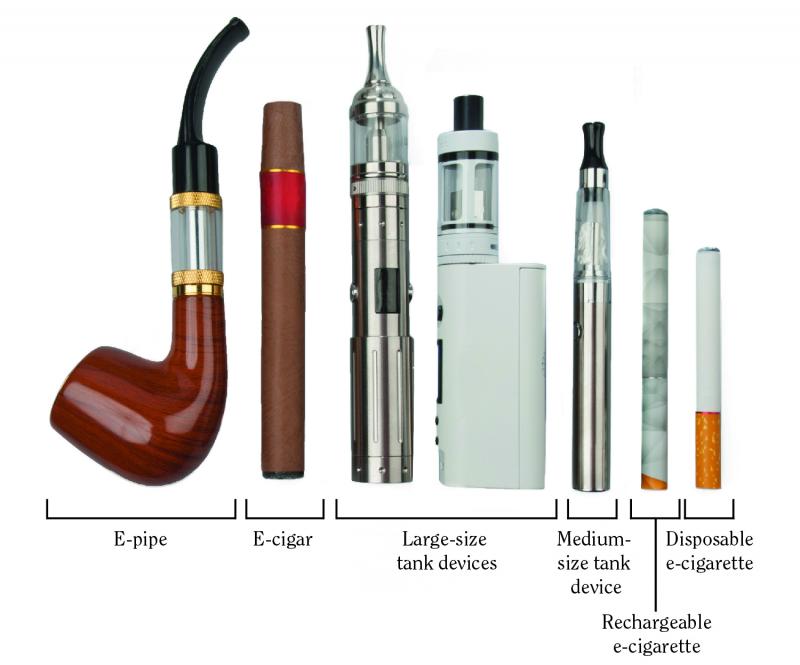
Department of Health and Human Services e-cigarette picture
E-cigarettes are popular devices that head a liquid that
becomes an aerosol or a vapor.
Are e-cigarettes healthier than smoking cigarettes? Long-term
health effects of e-cigarettes are unknown.
They are not known to be healthier.
Despite this, many adults try to reduce or quit cigarette smoking by
switching to e-cigarettes.
What are the risks of c-cigarettes? Exposure to heavy metals and toxicants and
nicotine poisoning. When youth start
using e-cigarettes there is an increased risk of subsequent cigarette and marijuana
use.
Rampant use: In 2017
one in five high school students reported using e-cigarettes in the previous
year.
What else are e-cigarettes called? Juuling.
Vaping. Digital cigarettes. E-hookahs, Personal vaporizers. Vape pods.
Vape pens.
What are e-cigarette brands?
Blu. Juul. Logic. Njoy. PHIX. Suorin. Vuse.
Why is vaping in teens especially detrimental? It is accessible. The devices are small enough to fit in their pocket for ease of use, even during class. Nicotine has a greater effect on their brains, which continue to develop into their 20s. Nicotine can impact brain pathways that control learning, mood, attention, and addiction.






 Dr. Leslie Greenberg's Blog
You must be logged in to post a comment.