


Who and why should we screen for diabetes?

flickr.com/photos/ 93571575@N03/

flickr.com/photos/ 93571575@N03/

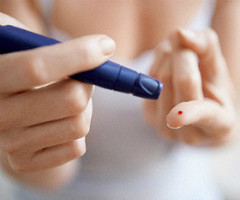
Why should we care about diabetes screening?  Uncontrolled diabetes can lead to blindness, limb amputation, kidney failure, and vascular and heart disease.

Does it work?  Screening patients before signs and symptoms has been found to lead to earlier diagnosis (and treatment!) but has not been found to reduce rates of end-organ damage– meaning kidney and heart failure.  Studies have found that screening for type 2 diabetes does not reduce mortality after 10 years, but maybe the patient sees benefits after 23 to 30 years.

There are differing opinions of when to screen.  The US Preventive Services Task Force suggests screening overweight or obese patients who are 40 to 70 years old.  If blood sugar results are normal, then this glucose lab should be repeated every three years.  If an individual is at “higher risk” then screening can be done earlier and more frequently than every 3 years.  Whereas the American Diabetes Association suggests that patients 45 years and older are screened yearly for their blood sugar.  If patients have major risk factors of diabetes like obesity, then patients can be screened younger than 45 years old.

What lab values are significant?  Diabetes can be made with a fasting plasma glucose more than 126 or a hemoglobin A1c more than 6.5%.  Results of fasting blood sugar should be confirmed with a repeat test.  A single random blood sugar more than 200 is also indicative of diabetes.

Posted in Diabetes, General Medicine- Adults | Tagged , , , , , , , , , , | Comments Off on Who and why should we screen for diabetes?

LGBTQ youth gets hope from “It Gets Better”

The “It Gets Better” Program was started in 2010 and it connects to youth through the internet in the form of videos of celebrities and politicians with the message… “It Gets Better.”

What is LGBTQ?  This is the term for lesbian, gay, bisexual, transgender, and questioning  people.

Why does this program exist?  LGBTQ youth may feel isolated from elders and mentors and the program is intended to show these at-risk youth who may live in rural towns and enduring teenage-hood that life will improve over time.  The Centers for Disease Control and Prevention (the CDC) states that suicide is the second-leading cause of death in youths aged 10-24 years old.  A LGB youth of color further increases that risk.  For those who identify as transgender as many as 25% report suicide attempt.  Of the 300 million Americans, 5% identify as LGBTQ.  It is not thought that mental illness is higher in this population, but rather they are tied to society’s lack of understanding and support of this population.

Visit http://www.itgetsbetter.org/ for more information!

Posted in Emotional health, General Medicine- Adults | Tagged , , , , , , , , , , | Comments Off on LGBTQ youth gets hope from “It Gets Better”

The Zika Virus: What to know?!

.flickr.com/photos/sanofi-pasteur/ 5284040324

.flickr.com/photos/sanofi-pasteur/ 5284040324

How long has this infection been around?  The Zika virus has been in the news recently. But, it is not new.  It was first isolated from a monkey in 1947 in Uganda.  Then there was an outbreak in Micronesia in 2007.  It is when the Zika Virus arrived in the western Hemisphere in 2014 that it came “on our radar.”  The first infection in Brazil was in May 2015 and the World Health Organization declared it a public emergency of international concern February 1, 2016!

How is it transmitted?  It’s transmitted by a bite from an infected Aedes aegypti mosquito.  When infected, the virus can be detected in all sorts of bodily fluids: blood, urine, semen, saliva, spinal fluid, amniotic fluid AND even breast milk.  And, transmission from mother to fetus can occur anytime during pregnancy.

What are the symptoms?  Symptoms are acute onset of low-grade fever, raised rash starting on the face and spreads to the chest, back and limbs, joint pains in the hands and feet,  and “pink eye.”  After infected, there is a 2 – 14 day incubation period.  Most symptoms resolve within 7 days.  Interestingly, the virus is only detectable in the blood for 7 days.  Once infected,  we think patients are protected from future infections.

What are the complications?  When females are pregnant and contract the infection, this can cause microcephaly (a small head in the child) and miscarriage (if within the first 13 weeks of pregnancy).  If not pregnant, the Zika infection may increase your risk of getting Guillian Barre Syndrome, which is a neurologic condition causing paralysis that starts in the feet and travels upward in the body.

How do you get tested?  You need blood work within 7 days of onset of symptoms.  The Nevada State Public Health Laboratory collects specimens and ships them to the CDC.  Call the Nevada Health Department at 775 328 2447 for consultation and approval of testing.  The Zika Virus is a reportable disease in the United States… this means if you suspect it, you need to test for it, and report any “positive” results to the CDC.

Who should be tested?  Pregnant patients who travel to an area with ongoing Zika transmission, even if they are without symptoms.  Pregnant patients living in an area with ongoing transmission.  Any patient with Zika symptoms who have traveled to an affected area within 2 weeks.  Infants born to mothers with positive or inconclusive test results for Zika.  Children with microcephaly whose mothers were in an affected area.

How to manage Zika infection?  Stay hydrated.  Take acetaminophen (Tylenol) for pain.  Avoid aspirin and ibuprofen until Dengue Fever ruled out.

How to prevent?  Avoid mosquito bites (Stay indoors.  Wear long sleeves and pants.  Wear insect repellant with DEET or picaridin, IR 3535, or oil of lemon eucalyptus.)  Avoid standing water to collect so that mosquitos do not have breeding sites.  Avoid travel to Zika transmission areas if pregnant.  Do not have sex (or use condoms) during travel.  Men with a pregnant partner should not have sex (or should wear a condom) for the remainder of the pregnancy.

We anticipate a vaccine in 1-2 years.

Want more information?  Call CDC Zika Hotline 770-488-7100.

Posted in infections, Obstetrics | Tagged , , , , , , , , , , , | Comments Off on The Zika Virus: What to know?!

Do you like sugary drinks?

Sugar-sweetened beverages are now linked with a 27% increase in visceral adipose tissue, (meaning fat).  Also, sugar-sweetened drinks are linked with cardiovascular diasease and type 2 diabetes.  There is a growing body (…pun intended!) of literature showing that these beverages may be harmful to our health.

Consider changing to water or unsweetened tea.  It may take a few weeks to appreciate a less sugary beverage …

flickr.com/photos/environmental_illness_network/ 16559453226/

flickr.com/photos/environmental_illness_network/ 16559453226/

as it takes a while for your taste buds to change.

I hope this helps.

Posted in General Medicine- Adults, obesity | Tagged , , , , , , , , , , | Comments Off on Do you like sugary drinks?

Migraines may increase stroke risk

flickr.com/photos/ devilskebab/7355494132

flickr.com/photos/ devilskebab/7355494132

A new study out that reviewed 11,663 older adults (average age 59) showed that patients with migraine with aura were at an increased risk of cardioembolic strokes.  This study followed over 11,000 people for 18 years and those with migraine WITH aura are twice as likely to have an ischemic stroke than those with migraine WITHOUT aura.

Some migraines occur without any warning.  Those migraines that are preceded withseeing rainbows or stars are considered “migraines with aura.”  It is the patients who perceive an aura first that are at increased risk of stroke.

If you have migraine with aura, please see your doctor about decreasing your risk factors of a stroke like keeping your blood pressure at goal, stopping smoking, getting an EKG to rule out atrial fibrillation and possibly not taking estrogen-containing birth control pills or hormone replacement.

I hope this helps.

Posted in blood pressure, Brain, General Medicine- Adults | Tagged , , , , , , , , , , , | Comments Off on Migraines may increase stroke risk

A syphilis resurgence!

flickr.com/photos/ briantology/1906761467

flickr.com/photos/
briantology/1906761467

Las Vegas is experiencing the highest rate of syphilis in the Western United States.   Other sites with a significant increase in cases are Kansas, Pennsylvania and Hawaii.

Syphilis is a sexually transmitted disease that has been around since the Roman times, but as a practitioner, I must say that I do not see if often.  Syphilis is caused by the Treponema pallidum which is spread by skin-to-skin contact when there’s a sore or lesion.  Sores are typically in the genital or anal areas … or the mouth.  Often there are no symptoms.  It is treated with penicillin.

The uptick it syphilis cases is multifactorial.  We physicians have tested for this more often and so more cases are picked up.  there is also a rise in anonymous sex via social media.  That linked with less consistent use of condoms with sexual contact increases the rate of transmission to others.

We test for syphilis by blood work, not the routine urine or genital swabs.  Please ask for this from your healthcare provider if you have had genital sores or risky sexual behavior.  Syphilis is especially prominent in gay men.

Be safe out there, folks!

Posted in General Medicine- Adults, Sexually Transmitted Infections | Tagged , , , , , , , , , | Comments Off on A syphilis resurgence!

Asthma increases women’s heart disease risk

flickr.com/ photos/ cobalt220/ 4343621338/

flickr.com/ photos/ cobalt220/ 4343621338/

A history of asthma was independently associated with a 24% increase in the risk of new-onset heart disease (meaning strokes and heart attacks) among postmenopausal women.

The Women’s Health Initiative study including 90,168 women between ages 50 – 79 showed an increased risk of heart disease in asthmatics.  It is postulated that the chronic inflammatory state that occurs in asthma may also accelerate the atherosclerotic process of the heart.

So, if you are a patient with risk factors for heart disease like obesity, hypercholesterolemia,  altered waist-hip ratio, diabetes AND asthma… you may benefit from statin therapy.

Keep this in mind.

Posted in Cholesterol, Diabetes, General Medicine- Adults, heart | Tagged , , , , , , , , , , | Comments Off on Asthma increases women’s heart disease risk

How long does the shingles vaccine stay effective?

herpes zoster day 3

herpes zoster day 3

… that depends on your health history.

If you have an autoimmune disease, the protection against the shingles infection wanes about 5 years after receiving the shingles vaccine.  The most common autoimmune diseases in this research project was rheumatoid arthritis (40%), psoriasis (33%), inflammatory bowel disease (20%), and then other assorted autoimmune problems.

There is a long-term Shingles Prevention Study which is watching how effective the shingles vaccine is in different patient populations.

Shingles cases among UNvaccinated patients is about 1.33 cases per 100 person-years.  Vaccinated patients had about half the risk of shingles compared to nonvaccinated patients.  The researchers are looking into the benefit from a booster vaccine after initial vaccination, when this should be given, and if this is effective at preventing herpes zoster.

I’ll keep you posted.

Posted in General Medicine- Adults, infections, Vaccines | Tagged , , , , , , , , , , , | Comments Off on How long does the shingles vaccine stay effective?

Homemade meals even better!

flickr.com/photos/hiptopiecesquares/3720977041

flickr.com/photos/hiptopiecesquares/3720977041

Another reason to cook a homemade meal… lower risk of type 2 diabetes!  How fantastic is that?!

A long-term prospective study of nearly 100,000 health care professionals showed that those who ate an average of 11-14 home-prepared lunches and dinners per week had a 13% lower risk of developing type 2 diabetes compared to those eating less than 6 per week.

Looking at homemade meals a continuous variable, each home-prepared lunch or dinner eaten per week decreased the long-term risk of developing type 2 diabetes by 1-2% according to the research.

There were other benefits, such as those who ate 11-14 homemade meals per week had a 15% lower risk of developing obesity during the first 8 years of follow-up.  Men who ate in that fashion gained about 2 pounds less body weight in the first 8 years.  It was also found that those who brought their meals also consumed fewer sugar-sweetened beverages.

Posted in Diabetes, General Medicine- Adults, obesity | Tagged , , , , , , , , , , , | Comments Off on Homemade meals even better!

Prophylactic medicine for HIV

flickr.com/photos/ hebe/ 3310171434/

Of course, holding hands does not transmit HIV. I just like the intimacy of the picture. flickr.com/photos/ hebe/ 3310171434/

Did you know that there is a daily prophylactic medication that can reduce the risk of sexually transmitted HIV by 90% and drug needle transmission of the virus by 70%?  There is!

Only 1/3 of primary care doctors are aware that this medication exists.

According to the CDC (Centers from Disease Control), 40,000 people are diagnosed as HIV positive yearly in the United States.  The most at-risk groups are sexually active gay men, injectable drug users, and sexually active heterosexuals with a risk of 1:4 and 1:5 adn 1:200 respectively.

This medicine, Truvada, was approved by the US Food and Drug Administration in 2012  It is a combination of two antiretrovirals and when taken daily it has been shown to be highly effective in decreasing the contraction of HIV.  The most common side effect of the medication is nausea and it rarely causes kidney dysfunction.  Due to kidney problems, labs should be done every 3 months.

The cost of Truvada is about $10,000 yearly and is covered by Medicaid.  We must not forget that the mainstay to decreasing HIV transmission is the correct and consistent use of condoms, the reduction of high-risk behaviors, increased access to drug treatment programs and available of sterile needles to IV drug users.

Now you know.

Posted in General Medicine- Adults, infections, Sexually Transmitted Infections | Tagged , , , , , , , , , , | Comments Off on Prophylactic medicine for HIV