Family medicine. My career choice.

I love stories.  I always have.  My parents instilled in me a desire to do my personal best, be self-sufficient (read that: financially independent) and to explore my passions.    I chose Northwestern University in Chicago (2000 miles from my hometown) to make my own way.  I challenged myself educationally and honed my skills.  Psychology was a great major as I love human behavior.  I enjoyed art history, architecture, and women’s studies – an advantage of a great liberal arts school.

 When I entered medical school I considered psychiatry and found the mental pathology was more than I desired.  I was primed to be an obstetrician until I realized that I’d  hand over the newborns to another physician at birth.  Family medicine allows me the breadth of medicine—to care for everyone– with the interrelationships and connections that I enjoy.

 I taught medical resident physicians for 12 years but recently I yearned for more patient contact.  During my new patient visit, I get to know them by discussing their past medical and social history so that  I truly know who my patient is and how I can help. 

This is the life I was to lead.  What a privilege and a joy it is to have passion for the entirely of my job.

Posted in Uncategorized | Tagged , , , , | Comments Off on Family medicine. My career choice.

shingles aren’t just for houses

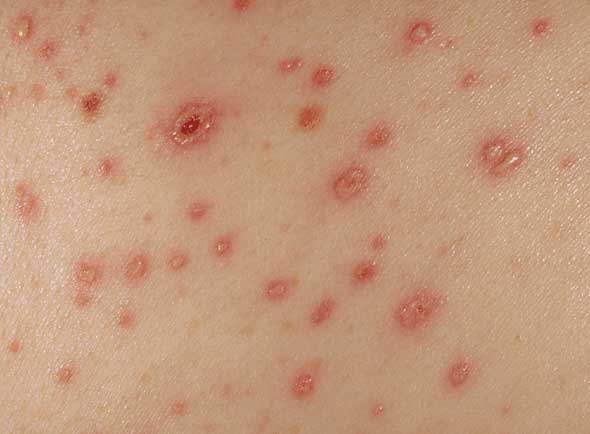
Are these chicken pox?
 
My neighborhood has been in an uproar recently about the contagiousness of chicken pox and shingles.  It is time for a little general knowledge dissemination.
 
Varicella zoster virus is the culprit.  It is one of 8 herpesviruses known to cause human infection.  There are 2 distinct forms:  varicella (“chicken pox”) and herpes zoster (“shingles”).  The primary or first infection of the virus results in chicken pox.  After that the virus lives in the body but is hibernating.  If or when it resurfaces, it causes shingles. 

shingles

 
The vaccine was created in 1995.  My three children have been vaccinated, and I recommend the vaccine to my patients.  The first dose is given at 12 months and then a booster at the “kindergarten physical”—between ages 4 and 6. 
 
Chicken pox is wildly contagious!  90% of household contacts get the infection if not vaccinated.  It is spread by nasopharyngeal secretions (spit) or by touching the pox lesions (ew!).  The vector (patient) is contagious to others 48 hours BEFORE they get a rash and stay contagious until all the pox are scabbed over which may take about 2 weeks.  The incubation time from contracting the virus to the beginning of a rash is 14 – 16 days.  Chicken pox is usually not harmful in children (except for those itchy pox lesions), but can be severe in adolescents, adults, and immunocompromised people.  Initial symptoms are fever, fatigue, and sore throat, followed by the beginning of the rash.
 
If I get a varicella vaccine can I still get the chicken pox?  Yes.  20% of those who get the vaccine get a breakthrough infection.  This is usually mild.                        

chicken pox


There are also criteria for vaccinating those people who think they never had chicken pox.  Vaccination is important for

  •  people older than 13 years old without immunity(which can be tested by a bloodtest). 
  • healthcare workers
  • those who have immunocompromised houseguests
  • childbearing-age females. 
     
    Well. . . there are the nuts and bolts!
Posted in General Medicine- Adults, infections, infections, Pediatrics, Uncategorized | Tagged , , , , , | 1 Comment

Back to school. Summertime IS the time for physicals

Ahhhhh. . . it’s summer.  So, do I need to take my child for their school physical now? Yes!  Annually preschoolers and older children need to be assessed for school readiness, developmental delay and physical ailments.  There are specific criterion for children to achieve at each age.  It is divided into four categories:  personal/social, speech, fine motor movement (fingers) and gross motor movement (limbs).  The screening tests for this should be performed at every well child check and school physical so we can get kids caught up.

It is the perfect time for parents’ to voice their concerns. . .(Why does my kid eat ice?  Dirt?   When will he be potty trained?  Why does my child need this vaccine?)  or child’s questions to be answered (What is this rash?  How do I stop picking my nails?)  . . . or for a tw/teen to get puberty advice from an expert (I’ve been experimenting with . . . .What is happening to me?  What happens when I. . . )

Shots.  The ACIP updates the immunization schedule every 6 months.  Many of the vaccines are required for school entrance every fall.  There are also new vaccines such as for meningococcal meningitis and for HPV.  The human papilloma virus vaccine is suggested for 9 – 26 year olds.  This decreases the risk of genital warts and cervical dysplasia  (I’ll save that for another blog. . . )

So. . .take one hour out of your summer schedule—between sno cones and the pool—for a check up!  It’ll do your mind some good.

Posted in Pediatrics, Uncategorized | Tagged , , , | 1 Comment

Vitamin D: Is it the new magical pill?

Vitamin D.  Is it a panacea?
 
We now know how important Vitamin D is to the body and how hard it is to get the recommended daily allowance when it is raining here in Wichita.  New guidelines show infants, children and adolescents need 400 IU of vitamin D daily.  So, children who consume less than one LITER of vitamin D-fortified milk per day will need supplementation. 
 
What does vitamin D do? 

  • It is essential for calcium metabolism and mineralization of bone.
  • Adequate levels of vitamin D may help decrease the risk of autoimmune  conditions, infection, and type 2 diabetes. 
  • Observational studies suggest vitamin D may reduce the risk of type 1 diabetes in infants and children. 
  • Subclinical vitamin D deficiency may contribute to the development of osteoporosis and increased risk of fractures and falls in the elderly, decreased immune function, bone pain, and possibly colon cancer and cardiovascular health. 
  • Many other benefits are suggested, but a study of 36,000 patients (Journal of National Cancer Institute 2008) did NOT find a protective effect against breast cancer.
     
    Breastmilk is best for newborns, but it does not supply enough vitamin D.  So, breastfed infants should receive 400 IU vitamin D daily (like Poly – Vi-Sol 1 ml daily) .  Formula fed infants will most likely have an adequate level of vitamin D and require no vitamin D supplementation.  Older children can get their 400 IU daily with Flintstone or gummy vitamins (check the serving size per age on the side of the bottle).
     
    Don’t I get Vitamin D from sunlight?  Yes, but most likely not an adequate amount.  Darker skin pigmentation, latitude, and amount of skin exposed make it difficult to assess how much sun the skin is getting.  Excessive sun exposure may increase the risk of skin cancer.
     
    For adults the suggested Vitamin D dosage is 600 IU a day.  A toxic dose of Vitamin D is over 2000 IU a day.  So, if you want to take anywhere between 600 to 2000 IU a day, that should be safe and effective.  While you are at it, Calcium 500 mg three times a day would be good for bone health, too!
Posted in General Medicine- Adults, vitamins and supplements | Tagged , , , , , | Comments Off on Vitamin D: Is it the new magical pill?

Hello Reno Families!


Hello, I am  Leslie Greenberg.  I am a family physician in Reno, Nevada.  I attended Northwestern University in Chicago, then University of Nevada School of Medicine.  I relocated back to my hometown in 2015.  I trained and practiced medicine in the Midwest (Indiana and Kansas) for 20 years before moving back West.  I consider myself a teacher and educator.  I  have taught 450 + family medicine residents (and countless medical students), over nearly 30 years.  I currently teach at the family medicine residency program in Reno and also see private patients.  I care for newborns through elderly patients in both the hospital and office.  I love to do women’s health (contraception and menopause care) and procedures: skin biopsies, circumcisions, IUD insertion/removals, paps, colposocopies, and toenail removals. I am a Menopause Society certified physician.  I invite you to read my blog.  If you would like to become a patient, please call 775-982-1000.

Medical Disclaimer

Please remember that medical information provided by myself, in the absence of a visit with a health care professional, must be considered an educational service only.  This blog should not be relied upon as a medical judgement and does not replace a physician’s independent judgement about the appropriateness or risks of a procedure or condition for a given patient.  I will do my best to provide you with information that may help you make your own health care decisions.

Posted in Uncategorized | Comments Off on Hello Reno Families!