
“Health care hero”. . . and my hero. Congratulations to my husband.
Dr. Mark Stovak – Wichita Business Journal.
http://www2.bizjournals.com/wichita/events/2011/health_care_heroes/2011/07/dr-mark-stovak.html
“Health care hero”. . . and my hero. Congratulations to my husband.
Dr. Mark Stovak – Wichita Business Journal.
http://www2.bizjournals.com/wichita/events/2011/health_care_heroes/2011/07/dr-mark-stovak.html
A recent packaging error may make your contraceptive choice unsafe. Please read the article to assure that your oral contraceptives are not among the recalled. Read on. . . .
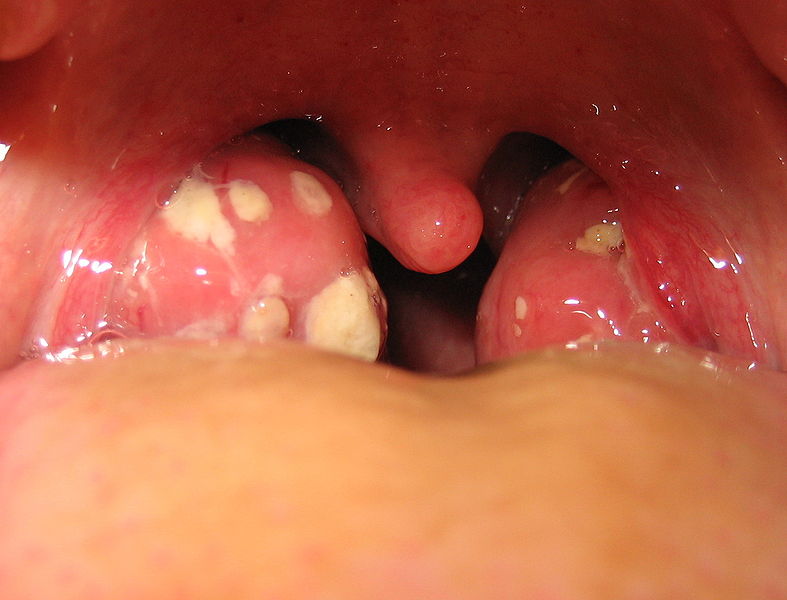
tonsilitis
More than 530,000 tonsillectomies are performed annually on US children. The American Academy of Otolaryngology-Head and Neck Surgery has provided an evidence-based (meaning there is good research) guide to identify patients who may most benefit from tonsillectomy.
You may ask. . . why not just take out the tonsils? Risks and benefits need to be weighed. There is risk with every surgery, infection and bleeding are the most common. So, a patient needs to show benefit before risk should be taken.
Tonsillectomies are performed for two main reasons: to prevent strep throat and to minimize sleep-disordered breathing.
The “Paradise Criteria” justifies tonsillectomy–depending on a minimum number of infections.
“Sore throat episodes” requires at least one of the following
These “sore throat episodes” must be documented in the
medical record.
So, as a family physician, I conscientiously keep up with my
subspecialists guidelines and refer patients to surgeons as needed. Of course, antibiotics should be given for any (suspected or) proven case of streptococcal pharyngitis.
Hope this helps.

flickr.com/photos/armitage77/ 5316562330
I was asked recently to comment on if multivitamins are needed for children. “The run-of-the-mill child who is thriving does not require a multivitamin,” says Dr. Jatinder Bhatia, chair of the AAP’s committee on nutrition. There are a few sets of patients who would benefit. Read on. . .
Multivitamins: Do young children need them? – MayoClinic.com.

flickr.com/photos/waytru/ 1190139568
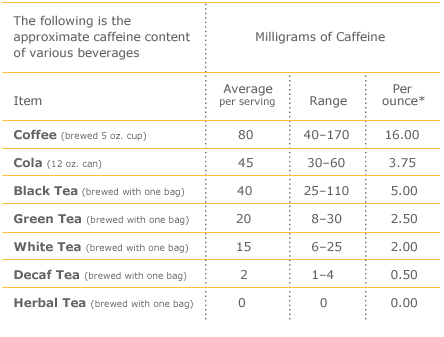
British Medical Journal published a study of 2,635 low-risk pregnant patients, their caffeine consumption amounts, and pregnancy outcomes. The results were pretty
interesting. The study was performed because past studies had shown that caffeine use of more than 300 mg a day seemed to be associated with fetal growth restriction (lower weight infants) and miscarriage. But, researchers were
unsure if past studies were done taking into account all the important
factors.
The results of the BMJ study showed that with increasing caffeine consumption, babies at birth weighed less. For example, when compared to women who drank on average 50 mg caffeine per day those who drank 200 mg caffeine a day had babies weighing 2.5 ounces less at birth and those who drank 300 mg caffeine a
day had babies weighing 5.75 ounces less at birth.
One take-away point is that there is a small, but notable,
decrease in infant birth weight dependent on amount of maternal caffeine intake. Researchers state that although a safe threshold cannot be determined, maternal caffeine intake of less than 100 mg per day minimizes the risk of fetal growth restriction.
http://www.bmj.com/content/337/bmj.a2332.full
Have you heard the “buzz” about the HCG diet? I have. My patients asked me to research it. I think this is a great article and I especially love the FDA’s use of the words “fraudulent” and “illegal.” Read on. . .
HCG Diet Dangers: Is Fast Weight Loss Worth the Risk? – US News and World Report.
flickr.com/photos/kightp/ 4527224826
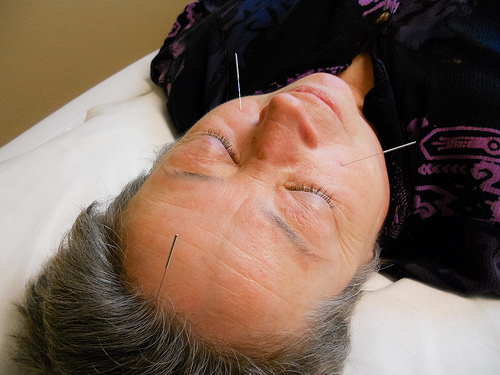
Yes! A Cochrane review of 4,419 patients showed that acupuncture is AS effective as traditional migraine headache treatment in the prevention of headaches. Evidence has shown that acupuncture, when used in addition to, or in place of, routine medical management (medications) reduces the frequency of migraine headaches.
Europe is more progressive than the US with 21.4% of English physicians performing acupuncture (or referring patients for acupuncture). In Germany, acupuncture is the most commonly used preventive treatment for migraine headaches.
Hmmmmmm. . . interesting—and effective–treatment option.

.flickr.com/photos/debrisdesign/ 502255811
What is it? It is a way to bathe and flush out virus, bacteria, allergens and mucus from the nasal cavity. It is thought to help by direct cleansing, removing inflammatory mediators, and helping the nasal hairs (mucociliary function) work better.
Why should I do it? Patients feel better: less post-nasal drip, less bothersome cough at bedtime, less sniffling. In addition, it has been shown to decrease use of antibiotics and medication-based (not saline) nasal sprays.
Who should NOT do nasal saline irrigation? Those with incompletely healed facial trauma
or those with difficulty controlling their breathing (as they may inhale the saline solution when they should be exhaling).
Who does it help most? Those with “rhinosinusitis”—a drippy, congested nose. It may also help with symptoms from (allergic or irritant-caused) rhinitis or a cold.
Is it expensive? No. There are nasal irrigation kits at the pharmacy. In addition, you can buy the salt/baking soda packs, or make your own (see the Wisconsin School of Medicine
web link below).
Thanks to the University of Wisconsin School of Medicine and Public Health for a recipe for saline solution, instructions for irrigation, trouble-shooting tips and links to audio and video teaching media.
http://www.fammed.wisc.edu/research/past-projects/nasal-irrigation
The Wichita Eagle newspaper ran recent stories regarding horrific domestic abuse. As a family doctor, my focus is to keep my patients well, both emotionally and physically. I routinely screen (meaning I ask everyone) at periodic visits like annual exams, prenatal or postpartum visits about abuse. I also look for signs or symptoms of abuse.
Abuse is pervasive and comes in many forms– all harmful.
Partner violence is a crime. During a lifetime, it is a common crime: 1 in 4 women and 1 in 9 men. It can occur among any type of couple—dating, married, heterosexual or same-sex. People of any age, income or education level, or ethnicity can be in an abusive relationship.
What can you do? Tell someone you trust: clergy, friend, physician.
Get organized: have your bank records, birth certificates, social security cards in a place that you can take if you leave in a hurry. These documents give you access to money and social services. Make a plan to go to a safe house, shelter or friend’s house.
If you feel you are in immediate danger, call 911. A restraining order may help the abuser stay away from you.

flickr.com/photos/vectorportal/5888281079
The National Domestic Violence Hotline has more information 1-800-799-SAFE or http://www.thehotline.org/get-help-in-your-area/

flickr.com/photos/ sixmilliondollardan/ 4341433704
Exercise-induced wheezing, also called bronchoconstriction,
happens when the airway passage shrinks during or after exercise. You may feel short of breath, start coughing or wheezing. There are triggers to avoid and some easy treatments. . .
It can be caused by
You can wear a mask to help warm and humidify the air. Several inhaled medicines help with the symptoms. There are short-acting inhalers (either bronchodilators or mast-cell stabilizers) that help when taken 15 minutes before exercise and last for 3 to 4 hours. Leukotriene modifiers are another type of medication which when taken daily helps ward off symptoms and are taken regardless of anticipated exercise. Steroid inhalers are also indicated for long-term control of asthma symptoms.
If allergens are your trigger antihistamines like Benadryl, Allegra, Claritin, or Zyrtec may be helpful also.
See your doctor for a history and exam. Consider wearing a medical-alert bracelet (which will help greatly in case of emergency). With the correct diagnosis, you should breathe easily, AND without thinking about it.
The goal is to be active and symptom-free.
For more information http://www.uptodate.com/contents/patient-information-exercise-induced-asthma?source=search_result&search=exercise+induced&selectedTitle=1%7E10


You must be logged in to post a comment.