Vitamin E. Men, don’t take extra.

If a little is good… a lot is NOT necessarily better.  A 7-year study of more than 35,000 men showed that extra vitamin E can significantly increase your risk of prostate cancer.

The study used a dose of 400 IU a day of vitamin E.  More than half of men over age 60 take Vitamin E, with ¼ of those taking at least the amount in the study.

We do not know why too much vitamins can help cause cancer.  Maybe it is that antioxidants become carcinogenic (cancer-forming) at high doses.

I heard a cancer doctor say…”consumers should be skeptical about health claims for unregulated over-the-counter products in the absence of strong evidence of benefit from clinical trials.”

I agree.

Posted in Cancer, General Medicine- Adults, Male issues, Uncategorized, vitamins and supplements | Tagged , , , , , , , , , | Comments Off on Vitamin E. Men, don’t take extra.

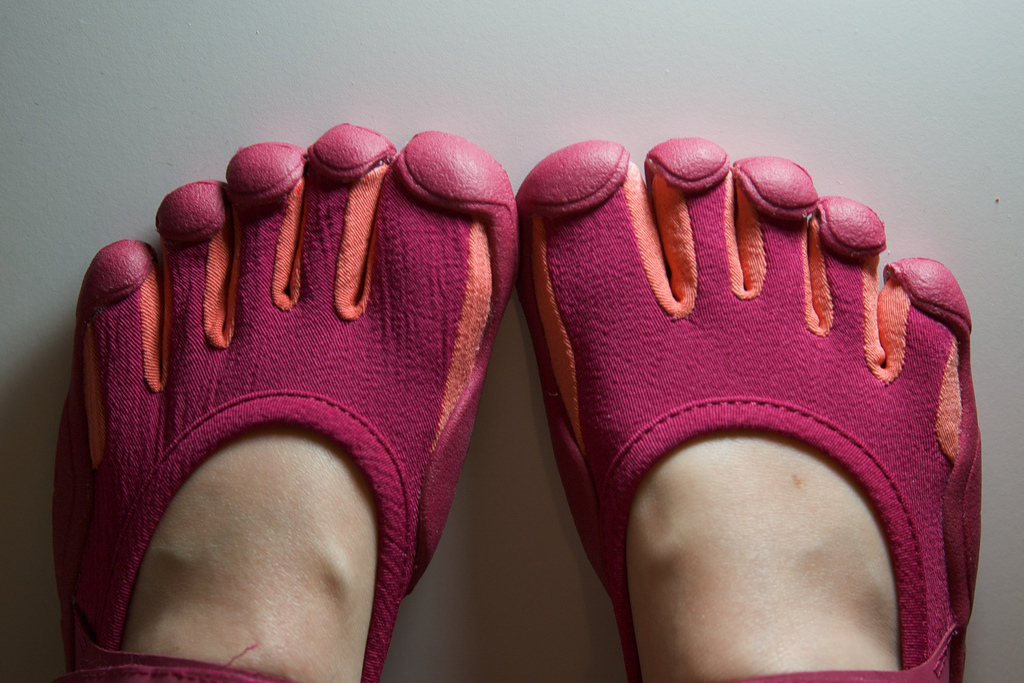
Interested in “barefoot running?”

flickr.com/ photos/ flavouredechoes/ 4731455391

Fellow Wichitans…

Barefoot and minimalist running expert Jason Robillard is speaking FREE this Thursday  April 26, 2012 (see details below).

Barefoot running may be better for the feet and may reduce the chance of repetitive stress injuries.  Robillard will discuss how to transition from running with shoes to running with minimal foot protection.  Robillard authored “The Barefoot Running Book: The Art and Science of Barefoot & Minimalist Shoe Running.”

Free.  Backwoods, 1900 North Rock Road, Wichita.  Thursday 4/26/12 7 pm.

Call 316 267 0350 for more information.

Posted in foot health, General Medicine- Adults, Uncategorized | Tagged , , , , , , , , , , , , , | Comments Off on Interested in “barefoot running?”

Still taking vitamin B12 injections? Move over shot. A pill may be just as good.

flickr.com/photos/ vaprotan/ 413973490

For years patients with low blood counts due to low vitamin B 12 levels came in the office once a month for a Vitamin B12 injection.   Two good studies compared intramuscular injection to oral route.  Both forms raised low vitamin B12 levels and improved blood counts and neurologic symptoms.  Both forms were well tolerated.  The oral form was less expensive.

Recommendations per the US Centers for Disease Control and Prevention (CDC) are to give 1000 mcg daily by pill per mouth or intramuscular 1000 mcg monthly.

Take your pick.

Posted in General Medicine- Adults, medication issues, Uncategorized, vitamins and supplements | Tagged , , , , , , , , , , | Comments Off on Still taking vitamin B12 injections? Move over shot. A pill may be just as good.

How to decrease your chance of getting an (or another) ankle sprain…

flickr.com/photos / srkkiran/ 897706165

Ankle sprains are common.  Once you have had an ankle sprain, you are more likely to get another ankle sprain… unless you help rehab your ankle.  An external ankle support (especially during physical activity) can significantly decrease an ankle sprain.  The sports with a high risk of ankle injury are soccer and basketball.  High-top shoes have NOT been shown to decrease ankle sprains.

Balance and “proprioceptive training” help greatly.  I tell my patients that proprioceptive training is re-teaching your brain where your foot is in space.  When you step off a curb, your brain needs to know exactly where your foot is, or you are more likely to misjudge the landscape and may sprain it again.

The ACSM, American College of Sports Medicine, suggests that rehab after an ankle injury should include guided stretching and strengthening of the ankle joint as well as balance training to prevent future injuries.  A primary care physician, sports medicine physician, or physical therapist can help teach guided stretching exercises.

Hope this helps.

Posted in foot health, General Medicine- Adults, Uncategorized | Tagged , , , , , , , , , , , | Comments Off on How to decrease your chance of getting an (or another) ankle sprain…

New acne treatment

flickr.com/photos/ smailtronic/ 2336460534

Acne treatment can be expensive.  Here is a new combination that may help decrease the costs of treating acne.  A new study shows that a new cream plus a pill may help the best.  This new medicine contains adapalene with benzoyl peroxide.  The especially effective regimen is this cream WITH doxycycline (antibiotic) pill.

A study showed that after completing 24 weeks of therapy, patients with “severe acne” had a “clear or almost clear” rate of 50% as well as a mean 76% reduction in total lesion count.

In addition, patient satisfaction surveys showed 87% would use the above regimen again, 76% were satisfied with treatment, and best of all . . . 67% feel better about themselves since starting treatment.

Pretty good numbers. . . especially when treating teens.

Posted in Dermatology, Dermatology, General Medicine- Adults, Pediatrics, Uncategorized | Tagged , , , , , , , , , , | Comments Off on New acne treatment

Gonorrhea. The G word.

flickr.com /photos/ jakefowler/ 34989134Nuts-and-bolts about gonorrhea.

  • Sexually transmitted.
  • Symptoms are different for men and women.  For men, the most common symptom is pain with urination.  In women, less than ½ have symptoms.  When present, symptoms are vaginal discharge and pain with intercourse.
  • 10 to 40% are coinfected with Chlamydia, too.
  • Cure rates are 95% with a single dose of antibiotics.

The natural history of untreated gonorrhea infection is weeks (to  months) of unpleasant symptoms… and then spontaneous resolution and clearance of the bacteria.  This means that you can get rid of the infection without antibiotics, but if left untreated, you are a vector and can pass this infection to others. And, gonorrhea can cause pelvic inflammatory disease (PID) which may lead to pelvic pain, pain with intercourse, and to infertility.

Ways to avoid gonorrhea?   Don’t have oral, anal or vaginal intercourse.  If you are with a new partner,have yourself and a new partner (go as a couple!  have fun with it) tested for sexually transmitted infections.  Use condoms.

Hope this helps.

Posted in General Medicine- Adults, infections, Sexually Transmitted Infections, Uncategorized, Women's Health | Tagged , , , , , , , , , , , , , | Comments Off on Gonorrhea. The G word.

Doctors ordering too many tests? Which tests? Read on…

Web MD has done a great job simplifying a new statement that discusses the overuse of many medical tests.  It lists tests that are (most commonly) unnecessarily ordered.    I’ve read it and agree wholeheartedly.  Click on the link to see the article and help better manage your own care.

http://www.webmd.com/back-pain/news/20120405/many-medical-tests-procedures-not-always-needed?page=2

Posted in General Medicine- Adults, Uncategorized | Tagged , , , , , , , , , | Comments Off on Doctors ordering too many tests? Which tests? Read on…

Breast screening guidelines have changed.

flickr.com/photos /mbk/ 3624302664/

Breast cancer deaths can be reduced with effective screening.   Screening is based on age and risk factors.

By age:  Women 20 years and older should be taught about breast self-awareness.    A woman should be aware of the normal feel and appearance of her breasts.  She should see her doctor with any concerns.

Age 20 to 39: Breast exams should be done by a doctor every 1 to 3 years.

Age 40 and older: Breast exams by a doctor AND mammograms should be done yearly. “Enhanced screening” should be recommended and risk reduction methods should be discussed in women who test positive for BRCA1 or BRCA2 gene mutations.  This enhanced screening may include every 6 month breast exam, annual mammograms, annual MRI of breast, and guidance in self-examination.

Breast MRI is not recommended in women at average risk of breast cancer.  The American Cancer Society recommends MRI only in high-risk women with a 20% lifetime risk.

The following website reviews risks and the amount of increased risk of breast cancer with each risk factor.  http://ww5.komen.org/BreastCancer/RiskFactorsSummaryTable.html

Posted in breast, Cancer, General Medicine- Adults, Uncategorized, Women's Health | Tagged , , , , , , , , | Comments Off on Breast screening guidelines have changed.

Pruritis ani– the dreaded “itchy butt.”

flickr.com/photos /r4vi/ 2316877289/I have a great job.  Every day is different.  One of the conditions I see commonly is perianal itching. This affects 1 to 5% of the population and is the second most common anorectal condition (after hemorrhoids—a topic for another time).

Studies show that most patients self-treat for one year before presenting to a physician.  There are many underlying problems that can lead to anal itching:

  • allergies,
  • dietary irritants (beer, caffeine, citrus, milk, tomatoes, chili peppers),
  • stool on the anal skin (poor hygiene, rectal skin tags),
  • infections (pinworms, STDs, yeast),
  • skin cancer, or
  • topical irritants (detergent, soaps, suppositories, tight clothing, toilet paper dyes or perfumes).

Once the itch-scratch cycle starts it is a difficult cycle to stop …as the scratching causes the anus to be inflamed which causes an irresistible urge to scratch more.

My job is to break that itch-scratch cycle, to diagnose the underlying condition, and to treat.  If after sufficient investigation and treatment, the area still itches a biopsy of the tissue is needed to rule out malignancy.

Hope this helps.

Posted in colon, Dermatology, General Medicine- Adults, Uncategorized | Tagged , , , , , , , , , , | Comments Off on Pruritis ani– the dreaded “itchy butt.”

Do you want to help teach medical students?

What a great opportunity!  Right in our fair city, Wichita!  The University of Kansas School of Medicine is opening their doors for you to be a “standardized patient.”

This was a new concept when I was in medical school 20 years ago.  People 18 years or older are needed to portray patients who have a particular medical history, body language, physical examination results, emotion and personality.  And, you get paid!  No medical or acting experience needed.

If you are interested in pretending to be a patient (and helping medical students learn), there is an informational session Thursday, March 29, 2012 at “the School”–1010 North Kansas in Wichita from 5 pm to 6:30 pm.  316 293-2615.

I love teaching. . . and now YOU can get in on “the act.”

Posted in Uncategorized | Comments Off on Do you want to help teach medical students?