Does exercise increase miscarriage?

flickr.com/photos/ summerbl4ck/ 3093533735

flickr.com/photos/ summerbl4ck/ 3093533735

Regular exercise for up to seven or more hours per week is NOT associated with increased rates of miscarriage in the first or second trimester.  Woman can do low or high-intensity exercise including aerobics, jogging, cycling and swimming without risk of miscarriage.   Bending and lifting at work is also not associated with increased risk of first-trimester (the first 13 weeks of the pregnancy) miscarriage.

These were the findings of a large six-year study in Denmark with 90,000 women.  No duration of exercise or gestational age was correlated with miscarriage.

The American  College of Obstetricians and Gynecologists recommends that active women continue to exercise at moderate intensity for 30 minutes on most day of the week during pregnancy.  Women who perform strenuous routines should be followed closely.  Also women who did not exercise before pregnancy should be evaluated by their doctor before beginning an exercise routine.

Medical reasons that you should not exercise are significant heart disease, restrictive lung disease, incompetent cervix, multiple gestation at risk of premature labor, persistent vaginal bleeding, placenta previa after 26 weeks pregnant, premature labor during the current pregnancy, ruptured membranes and preeclampsia or pregnancy-induced hypertension.

Posted in Obstetrics | Tagged , , , , , , , , , , , | Comments Off on Does exercise increase miscarriage?

Cradle cap?!

flickr.com/photos/cdaisym/ 4013509031/

flickr.com/photos/cdaisym/ 4013509031/

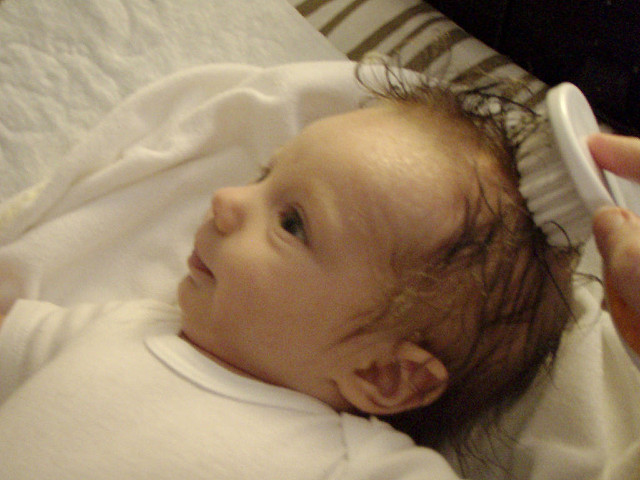
Oh my!  Many parents bring in their babies with a thick, scaly crust on their head.  This is usually cradle cap.  The fancy (medical) name for this is seborrheic dermatitis.    The scaling, redness, and itching occurs most often on the scalp and face (often in the eyebrows).  On infants, cradle cap often resolves spontaneously, without treatment.  Cradle cap peaks at 2 and at 12 months of age.  It also may occur in adolescence and early adulthood.

Treatment of infantile seborrheic dermatitis is primarily rubbing emollients that help loosen scales.  Good examples of emollients are mineral oil, olive oil or petroleum jelly.  The scales can then be removed by rubbing with a cloth or an infant hair brush.  Ketoconazole is an antifungal cream that can also be used and is thought to be safe.  The FDA has not approved any medicated shampoos for children younger than two years.

If you get this as an adolescent or an adult,  over-the-counter shampoos and topical antifungals (like ketoconazole) are helpful.  It is more common in men and is typically more severe in cold and dry climates and during periods of increased stress.  Seborrheic dermatitis is a chronic condition and so ongoing maintenance therapy is often necessary.

There are lots of other skin conditions that can be flaky on the scalp so if the above treatment does not work, see your doctor.

Posted in Dermatology, Dermatology, General Medicine- Adults, Pediatrics | Tagged , , , , , , , , , , | Comments Off on Cradle cap?!

Nausea medicines: Many causes and different solutions

https://www.flickr.com/photos/noeluap/134636824/in/photolist-5cRfKa-8a3Y3-7nAYHX-pwjFd-7MR1po-cU3Qy-4vpWod-4vTypG-nSnx5s-5kkvE5-dwaJGt-7uzBgG-5PSqeY-RKY3W-54fTgM-rqQMqx-5fGzzm-57ScZK-9FHHLx-jtNjc-Dbm1i-fGpdFS-rUtUM-hNxvpF-7L3PPW

flickr.com/photos/ noeluap/134636824/

Nausea.  This is a common symptom.  It can be treated by a variety of medicines.

Nausea and vomiting are mediated by three neurotransmitter pathways: visceral stimulation releases dopamine and serotonin; vestibular and central nervous system activation release histamine and acetylcholine; and chemoreceptor trigger zone activation releases dopamine and serotonin.

If your doctor treats your nausea by targeting the appropriate pathway, then this will save you money and time (meaning…. time feeling awful).

  • For patients with vertigo, antihistamines and anticholinergics (like Antivert) are most effective.
  • Gastroenteritis ( intestinal “flu”) is best treated with dopamine antagonists like Reglan.
  •  Pregnancy-related nausea is best treated with an over the counter medicine called pyridoxine and adding doxylamine with pyridoxine  may help even more.  Ginger also helps.
  •  Those with migraine headache-associated nausea may best be treated with metoclopramide (Reglan).
  • For pregnancy related hyperemesis gravidarum (extreme condition of vomiting and dehydration), ondansetron (Zofran) works great.
Posted in General Medicine- Adults, medication issues, pregnancy | Tagged , , , , , , , , , , | Comments Off on Nausea medicines: Many causes and different solutions

Infantile hemangiomas

hemangiomaOften a baby is born with a little red dot and then within a few weeks that dot has transformed into a large vascular lesion.  This occurs in 5% of births.  They are called infantile hemangiomas.  Usually they appear by four weeks of age and STOP enlarging by five months of age.  Most involute (resolve) by age four.

Management of infantile hemangiomas is often “benign neglect.”  This means … watchful-waiting.  If indicated, ultrasound may be done to see how much blood flow and to watch the underlying structures.  Other structural abnormalities may be present.  If the vascular lesion is near the airway or the mouth or the eye this may cause functional impairment and warrants closer investigation.

Elective treatment may be performed to reduce the likelihood of disfigurement as up to 70% of infantile hemangiomas lead to residual skin changes (increased blood vessels at the site or redundant/extra skin or scarring).

Treatment may include systemic (or injected) steroids or blood pressure medications or laser therapy.  Surgical resection is not recommended because of the higher risk of surgery complications to the child.

Watchful waiting until the child is age 4 and then addressing any resultant skin changes may be the best treatment.  Talk to your doctor about what is right for your child.

Posted in Dermatology, Pediatrics | Tagged , , , , , , , , , , , | Comments Off on Infantile hemangiomas

Three HPV vaccine types to choose from…

flickr.com/photos /hebe/ 3310171434

flickr.com/photos /hebe/ 3310171434

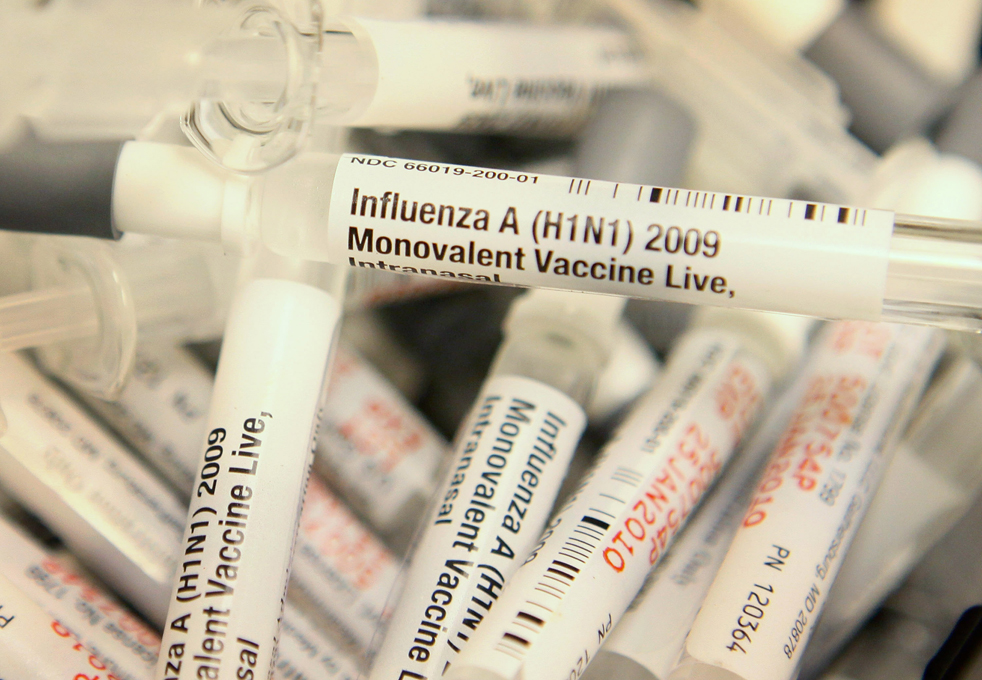
There are three HPV vaccines.  The vaccines cover a different number of HPV subtypes: One of them covers for two , one with four and the newest one that covers NINE subtypes.   The 9 subtype vaccine offers a small advantage over the quadrivalent (4) vaccine.  The added protection against infection and disease caused by HPV types 31, 33, 45, 52, and 58 offers the potential to prevent an additional 30 to 35% more high-grade cervical lesions on females and to increase cervical cancer prevention from approximately 70% to 90%.

The key is to vaccinate BEFORE sexual contact. The HPV vaccine has no impact on HPV infections acquired before vaccination.  The 9-valent vaccine is 96.7% effective against the 9 HPV subtypes that it immunizes against.  This is amazing!  There are lots of medicines and vaccines that are not this effective.  The CDC suggests the vaccine be given at age 11 or 12, but may be started at age 9.  This vaccine should be given to both males and females as it has shown to decrease risk of oral cancers AND cervical cancers.

For more information, look at  http://www.cdc.gov/hpv/parents/vaccine.html

Posted in General Medicine- Adults, infections, Pediatrics, Sexually Transmitted Infections, Vaccines, Vaccines | Tagged , , , , , , , , , , , , , , | Comments Off on Three HPV vaccine types to choose from…

Free medical care at the Med School!


Posted in Uncategorized | Comments Off on Free medical care at the Med School!

Free mammograms in Reno

Posted in Uncategorized | Comments Off on Free mammograms in Reno

What treatment is best for appendicitis?

https://www.photos /jjjohn/3924006096

https://www.photos /jjjohn/3924006096

Appendicitis is when a part of the small intestine (called the appendix) is inflamed.  Each of us has an approximate 7% lifetime risk of having appendicitis.

Why is appenditis important?  Death can result if appendicitis isn’t treated.  If the appendix gets  inflamed, this can lead to an abscess (pus pocket) and if it bursts the infection can be transmitted throughout the abdomen (called peritonitis).

What is the treatment for appendicitis?  Standard of care has been emergent surgical removal of the appendix.  Recent studies (which are weak and may be confounded) have shown  benefit with antibiotics.  There were also no studies done on children, so we are unsure how antibiotics and surgery compare to eachother in the treatment of children.

At this point, if I (or my child) had appendicitis, I would ask for surgical resolution of the problem.

FYI


Posted in General Medicine- Adults, infections | Tagged , , , , , , , , | Comments Off on What treatment is best for appendicitis?

Who and why should we screen for diabetes?

flickr.com/photos/ 93571575@N03/

flickr.com/photos/ 93571575@N03/

Why should we care about diabetes screening?  Uncontrolled diabetes can lead to blindness, limb amputation, kidney failure, and vascular and heart disease.

Does it work?  Screening patients before signs and symptoms has been found to lead to earlier diagnosis (and treatment!) but has not been found to reduce rates of end-organ damage– meaning kidney and heart failure.  Studies have found that screening for type 2 diabetes does not reduce mortality after 10 years, but maybe the patient sees benefits after 23 to 30 years.

There are differing opinions of when to screen.  The US Preventive Services Task Force suggests screening overweight or obese patients who are 40 to 70 years old.  If blood sugar results are normal, then this glucose lab should be repeated every three years.  If an individual is at “higher risk” then screening can be done earlier and more frequently than every 3 years.  Whereas the American Diabetes Association suggests that patients 45 years and older are screened yearly for their blood sugar.  If patients have major risk factors of diabetes like obesity, then patients can be screened younger than 45 years old.

What lab values are significant?  Diabetes can be made with a fasting plasma glucose more than 126 or a hemoglobin A1c more than 6.5%.  Results of fasting blood sugar should be confirmed with a repeat test.  A single random blood sugar more than 200 is also indicative of diabetes.

Posted in Diabetes, General Medicine- Adults | Tagged , , , , , , , , , , | Comments Off on Who and why should we screen for diabetes?

LGBTQ youth gets hope from “It Gets Better”

The “It Gets Better” Program was started in 2010 and it connects to youth through the internet in the form of videos of celebrities and politicians with the message… “It Gets Better.”

What is LGBTQ?  This is the term for lesbian, gay, bisexual, transgender, and questioning  people.

Why does this program exist?  LGBTQ youth may feel isolated from elders and mentors and the program is intended to show these at-risk youth who may live in rural towns and enduring teenage-hood that life will improve over time.  The Centers for Disease Control and Prevention (the CDC) states that suicide is the second-leading cause of death in youths aged 10-24 years old.  A LGB youth of color further increases that risk.  For those who identify as transgender as many as 25% report suicide attempt.  Of the 300 million Americans, 5% identify as LGBTQ.  It is not thought that mental illness is higher in this population, but rather they are tied to society’s lack of understanding and support of this population.

Visit http://www.itgetsbetter.org/ for more information!

Posted in Emotional health, General Medicine- Adults | Tagged , , , , , , , , , , | Comments Off on LGBTQ youth gets hope from “It Gets Better”